Twelve Years.

Twelve years ago. Unbelievable.

David and i walked into the Marriott World Center and found ourselves in a parallel universe. In this world there were families wandering around laughing, little ones dragging teddy bears, kids who seemed…happy. It was my first homeschool convention, my first stop at Florida Parent Educators Association, or FPEA. We were entranced.

Twelve years ago. Jillian was dragging her blankie around and learning that the world could be unkind to kids who had their own dreams for life. David and I were in the unsure stage of the homeschooling decision. Could we? Should we? How? We knew we wanted our two daughters to forge their own ways of looking at life, and we had a good idea that homeschooling was how we were going to accomplish that. But…really? Twelve years ago there were an awful lot of denim jumpers walking around that hotel. I am not a denim jumper kind of girl.

Then we stepped foot into the curriculum hall and every doubt fled away like worries on Christmas morning. I was energized by the amazing options. Squished and pushed on every side (the FPEA was already outgrowing its home in the Marriott and contemplating the Gaylord Palms…oh those were the days!), I felt like I’d stepped into my comfort zone. Let other moms be shell-shocked and overwhelmed, I was happy.

Twelve years later the journey ends this weekend. Three years ago we graduated Kylie. This year our baby Jillian walks down the aisle to Pomp and Circumstance. In all those years I have loved every moment in the curriculum hall until. quite frankly, last year. That’s when I realized I didn’t need any of it anymore. Even as early as last year I could see this day coming. Our curriculum buying was over. Sometimes the curriculum hall feels like a graveyard of failure (“Tried that, didn’t work. Tried that, tried that, tried that.”) Other times it feels like the magic ingredients that added up to our unique, amazing girls (“Little bit of that, some of this, we threw in a whole lot of that.”).

Twelve years.

It’s been an incredible ride. I’ve quit homeschooling every February (burnout…take a week off it will go away.). I’ve developed new ways to teach old information (mall school is still my favorite: architecture, nutrition and consumer science wrapped into a shopping experience that reset Momma’s happiness quotient!). I’ve been through 4-H and more music lessons than I can remember.

Jillian walks down the aisle on Sunday morning, but I’m also closing a chapter in my life. I’m proud of her. I’m proud of all of us. But tonight I felt a bittersweet longing to conquer the curriculum hall just one more time.

Panera Bread and authenticity

Panera Bread is unsurpassed when it comes to defining a niche market. Think about it quickly: what do you think of when you think of Panera? Amazing food? Probably not.

I am sitting at Panera now. It is 2:45, a time when most lunch spot snare hunkered down preparing for dinner. They are usually barren. Not Panera. There are businessmen,students and retired people all over this restaurant. The common denominator? They are all on their computers, iPads and phones. Like me. Panera = free Internet. Perfect niche that fills the store all day long. The process, of course, builds community. There are regulars here as anywhere.

I am kind of melancholy today to tell you the truth. This particular Panera always reminds me of a conversation I had here years ago. His name was Joe, and we had gone to church with him for years. He was retired, and his wife was active in our children’s ministry. They were the friendly older couple always serving punch at every event, if you know what I mean. This particular day Joe was bussing our table. I looked up totally surprised.

“Joe do you work here?”

“Yep. For months now. I wouldn’t know what to do without the people here. They are like family. And I need the money.” This last bit surprised me, and something in his eyes made me wonder. I casually asked about his wife.

“Haven’t seen her. She divorced me four months ago. I am all alone.”

I was shocked. I KNEW these people well. I went to church with them, knew their family history. But in the environment of church, they had never reached out for help. In fact, as I thought about it, they had kind of dropped off the radar. It was a short conversation in Panera, but Joe was finally being transparent, honest.

That is the value of community third places like Panera, and why we need to be present in them. It is why the church — as glorious and life-giving as it is — can’t fill every need. Sometimes it takes a conversation in Panera.

Joe isn’t here today, and I am fairly sure he has left the area. But for an half an hour years ago we took the moments to connect authentically.

I am glad I stopped in here today to remember.

Random thought process with iPad and Corkulous App

I have spent the better part of two weeks recuperating fromnthe major allergy attack from Chicago. It has actually been a great two weeks reading, praying and yes…playing with my iPad. My goal with the iPad is to lighten my travel load. I have already found that i leave all but one book at home, but can I leave my computer behind? To do that I need to be able to do two things: keep track of my digital/real world life and write.

Keeping track of real life just got a whole lot easier with an app called Corkulous. It is, indeed, a cork board. I have started cork boards for daily life as well as for various writing projects. Check out the screen shot below. I just love the random possibilities of the board! It sets my old Creative Memories scrap booking juices flowing.

Writing is still problematic, though the external keyboard should help with that. Somehow my “voice” changes on the iPad.

Oh well, just a random update from a formerly sidelined couch warrior! And yes…I think I may be able to survive this latest attack. If only my hearing would come back!

Q conference resources

just a quick resource for those who have been following the Q updates. The amazing Q team sent out an email with all the reources, links and ideas for follow up from Q. I would be happy to forward that email to anyone who wants it. Just leave a comment and I will forward it to you.

What a great resource…thanks Gabe Lyons and all the Q team!

Book Review: Radical by David Platt

You and I can choose to continue with business as usual in the Christian life and in the church as a whole, enjoying success based on the standards defined by the culture around us. Or we can take an honest look at the Jesus of the Bible and dare to ask what the consequences might be if we really believed him and really obeyed him.

If Jesus is who he said he is, and if his promises are as rewarding as the Bible claims they are, then we may discover that satisfaction in our lives and success in the church are not found in what our culture deems most important, but in radical abandonment to Jesus.

Radical, by David Platt

There is a longing inside us — if we are honest — to discover that life is about more than it seems. I’m not willing to believe that life revolves around our next vacation, our next goal, the next business meeting. Are you? If you are about ready to go on a quest for that deeper meaning, then pause long enough to read the new book Radical, by David Platt. But be forewarned: it will mess with your mind and maybe even your life.

David gives us glimpses into people whose hearts and lives are sold out in radical devotion to Christ. Sometimes those people do crazy, counter-cultural things like living BELOW their income so they can give away more for the causes in the kingdom that stir their hearts and minds. Sometimes they actually sell it all and move. Sometimes — more often — they reorient their lives so that their values and their energy and their time all work toward the kingdom, rather than creating conflicting values in our day to day life. But it takes courage to step out of the rat race and choose a new path.

I could not help but think that somewhere along the way we had missed what is radical about our faith and replaced it with what is comfortable. We were settling for a Christianity that revolves around catering to ourselves when the central message of Christianity is actually about abandoning ourselves.

Abandoning ourselves is easier said than done. It costs to follow Christ the way he demands to be followed. Indeed, if you read the Bible carefully, he often tried to talk people out of following him! But the rewards for those who do…”We will discover that our meaning is found in community and our life is found in giving ourselves for the sake of others in the church, among the lost and among the poor.”

And that was only chapter one, folks.

Honestly, this book is not that long, but it reminded me that I am a member of the worldwide, global, historical church. It reminded me that there are billions (with a B) of people out there who have never heard the story of Christ and his amazing gift for us. It reminded me of the mystery and joy of a God who takes it all and gives back oh so much more!

Maybe this is why we fill our lives with the constant drivel of entertainment in this culture — and in the church. We are afraid that if we stop and really look at God in his Word, we might discover that he evokes greater awe and demands deeper worship than we are ready to give him.

David sums up his book with a radical one year experiment. He introduces it by saying this:

Real success is found in radical sacrifice. Ultimate satisfaction is found not in making much of ourselves but in making much of God. The purpose of our lives transcends the country and culture in which we live. Meaning is found in community, not individualism; joy is found in generosity, not materialism; and truth is found in Christ, not universalism. Ultimately, Jesus is a reward worth risking everything to know, experience, and enjoy.

I know it is kind of skipping ahead, but do you want to hear the one year challenge?

  1. Pray for the entire world. Get an aid such as OperationWorld and literally begin praying for everywhere around the world in this one year. You’ll be amazed, he says, at the way prayer opens our hearts and minds. Jesus asked his disciples to pray not for the poor and the sick, but for the people who would go to them. He wants us to pray for people to go to the countries you will learn about. Great family project.
  2. Read through the entire Bible in one year. “We have settled for far too long for “Bible lite,” both as individual Christians and in the community of faith. We have adopted a Christianity consumed with little devotional thoughts form God for the day…” Imagine the power of praying around the world and reading the Word for an entire year! Do you think you would be transformed at the end of that year?
  3. Sacrifice your money for a specific purpose. Pick a concrete project and devote every dollar you can to it for one year. Set a cap on your lifestyle for this one year and get involved with changing your world personally through your giving.
  4. Spend your time in another context. This is the one we’re all afraid of, isn’t it. Go. We have to change our context and go. He suggests that if we could just give 2% of our time (roughly one week) to changing our context and bringing the Gospel to the world, it would revolutionize the other 98% of our time.
  5. Commit your life to multiplying community. Find a place within your body of believers to make disciples and support each other. “If the radical, simple living we see Jesus talking about were more common in the church, it would be much easier for us to live simply as well…give liberally, go urgently and live dangerously together.”

That’s it and that’s enough. It’s more than enough! I have to be honest with you, I don’t know if I can live up to that one year commitment. But I’m pretty sure I’d like to try. In the best of all scenarios, David and I would find a group of others committed to making that hard climb. Seems easier to do together, doesn’t it?

Radical, by David Platt. Download it on your Kindle App and off you go. Let me know what you think!

Resources for Radical can be found here.

Some of Q Conference 2010 Day 2

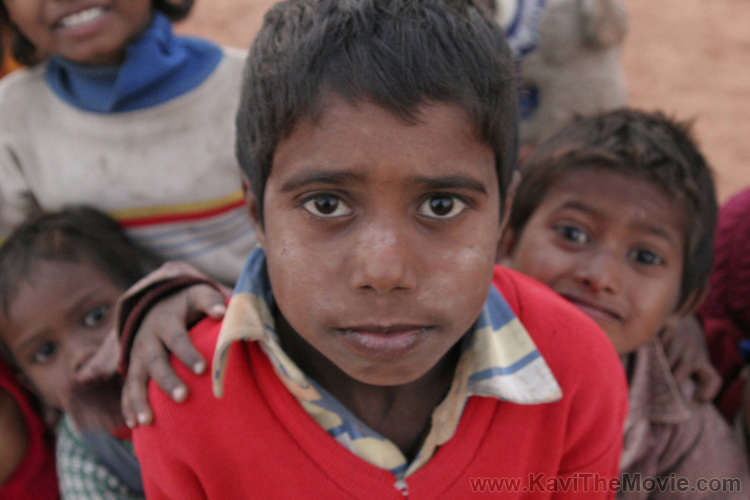
Focusing on Fatherlessness and child slavery, day two was intense. Image from Kavi, the movie

I’d like to get through a few more of the notes from the Q Conference. For those of you who have had time to wonder, I’ve been pretty much out of commission since the conference. That beautiful Chicago spring led to a massive allergy attack, which has led to lingering illness ever since. I’ve also had a quick trip to Atlanta to pick my daughter up from her sophomore year of college, so only now am I getting around to Q processing!

The afternoon of Day Two was essentially dedicated to the growing crisis of fatherlessness in America and around the world.

Roland Warren – Responding to our Fatherless

National Fatherhood Initiative

The way we relate to each other is really based on our concept of fatherhood, and fatherhood is under attack today. The epidemic of father absence is part of the enemy’s attack plan today. People today need to understand that God is a good father. They need to know what that means.

The baptism of Jesus gives us a good example of the fatherhood of God in action. As Jesus was being baptized, he heard the Father say “This is my beloved son in whom I am well pleased.” God the Father was affirming his son, publicly. Roland pointed out that this event took place right before Jesus was tempted in the desert. How important it is that we affirm our children before they face their temptations! Roland also pointed out another example of fatherhood, in the life of the young DC Sniper. “I had a hole in my soul,” he said,”That (the older man who encouraged him to join him in the shooting rampage) knew how to exploit. He knew my weakness. He knew I didn’t have a father.” This is a worldwide issue that requires a worldwide response. Finally, Roland pointed out that in most churches, the men’s ministry has nothing to do with the student ministry, but connecting the two could provide the mentors that our kids need.

Panel on Fatherlessness

John Sowers – The Mentoring Project

Esther Fleece – Focus on the Family

Marc Andreas – Bethany Christian Services

Jason Locy – Fivestone (Check his site for the video they produced for Bethany Christian Services)

The panel on fatherlessness wrapped up with a call to action to our churches and ourselves. Q would like every person to get involved in relieving the plight of fatherlessness. They offer four concrete suggestions.

  • Create a city-wide mentoring initiative (goal – 10 cities)
  • Foster 120 children
  • Support 300 adoptive families
  • Build 200 houses and orphanages in Haiti

Finally there was an individual challenge to everyone: can you give just three minutes a month to publicizing the crisis of fatherlessness?

Soledad OBrien and Jonathan Olinger – Discover the Rescued

Soledad O’Brien has been everywhere on CNN the past week with her documentary “Rescued” which explores the orphans and trafficked children in Haiti. If you haven’t seen it yet, get online and find it or look at CNN’s schedule for a rebroadcast. I watched it today as I prayed for my daughter and the team she is with in Haiti right now. It’s powerful. You can find some backstory and clips here. Listening to Soledad and Jonathan speak was powerful. Jonathan had been in Haiti documenting the stories he’d found in the orphanages long before the earthquake. When he met Soledad and joined forces with CNN, his stories have traveled around the world. One quote from Soledad stuck with me: “I’m bringing my 9 year old daughter back to Haiti to work in the orphanage with me. I want her to know that she is not just an American citizen, she is a global citizen.” This tragedy affects everyone.

Roger Sandberg – Relief and Redevelopment

Medair.org

Roger is one of those Chuck Norris kind of guys that is the first guy in after a natural disaster. His organization and Roger’s experiences helped us process the difference between immediate relief effort and redevelopment. There are so many issues facing those interested in helping after the initial rescue phase. Sometimes that help can hurt, and sometimes it can hinder the local economy from doing on its own what it needs to do. There are phases of aid: emergency relief (search and rescue), rehabilitation (transitional) and development (limited outside support). Knowing what kind of aid is needed leads to better financial decision in allocating aid money.

Brian McLaren – Conversations on being a heretic

Brian is one of those polarizing authors and pastors. In this afternoon session, he sat down with Scott McKnight and had a discussion about some of his more controversial subjects. Quite honestly, dear readers, this is not an issue that I was following before the discussion. As a result, I felt like I was listening to two friends discussing some party that I’d not attended in the first place. I’m sure that some of the other Q recaps have better information for you. I was intrigued to hear McLaren, having heard bits of his reputation. I was impressed with the fact that while McKnight and McLaren obviously had a few points of disagreement, their conversation was congenial and profitable. I can’t help but think that if we could sit and listen to people we “disagree” with before we write about them or judge them, we might find more areas of common ground than we suspected. So that’s my take-away from the McKnight-McLaren discussion: get to know them before you judge. Not too shabby, actually.

Gregg Helvey – The Story of Justice

My claim to fame: riding in the elevator at the hotel with Greg and finding out that he had been at the Oscars before his presentation. Gregg developed a short film, Kavi, which focuses on the child slave trade in India. We got to screen the movie after dinner, and it is amazing. Gregg says in the Q booklet, “I first heard about modern-day slavery back in 2001 and I was shocked to learn that there are more slaves on the earth today than there were in the entire trans-Atlantic slave trade. I went to India to see this firsthand. There, I traveled to more than twenty brick factories that all employed young boys in forced labor. I knew that the boys I met and the stories I heard would give my film the authenticity I needed.” At Q in NYC two years ago we heard Gregg discuss his movie in production. It was a privilege to hear of the miracle of its popularity and its Oscar nomination this year.

Go here to read more about Kavi, then download it on iTunes or buy the DVD.

Q Conference 2010 Day 2 session one

Jonathan Merritt – “Creation Care and the Gospel”

I really enjoyed Jonathan’s presentation, which began with the premise that there were three relationships broken in the garden: our relationships with God, each other, and creation. Restoring the latter, our relationship with creation, is Jonathan’s passion. He has written a book, Green Like God, Unlocking the Divine Plan for our Planet. I’ve already downloaded it on my phone and can’t wait to read it! You can go here to learn more about Jonathan and his latest book.

Phyllis Tickle – “Rediscovering the Ancient Practices”

The ancient practices, by the way, are really disciplines. We’ve substituted the word practices to make it easier to approach! To begin with, remember that we are all dual citizens of both heaven and earth. The practices are given to us to remind us of this.

The Seven Ancient Practices (the first three govern our body, the last four govern our time):

  • Tithing, fasting and the sacred meal (which is the most intimate thing we can do with each other in community) are the first three.
  • Fixed Hour Prayer – governs our day. Join with people all over the globe who pray in a cascading gathering of prayer in each time zone.
  • Sabbath – governs our week.
  • Liturgical Prayer – governs the year.
  • Pilgrimage – once or twice in a lifetime. We have lost the sense of faith incarnate, the sense of journey to a holy place.

Phyllis spent some time further describing Fixed Hour Prayer, which is a habit from the earliest days. Every three hours you pray through the Daily Office, joining your voice with all the unseen Christians in your time zone. As you finish your prayers, the next time zone is soon to begin them. it rings the globe and draws us all together.

Matthew Sleeth – “Observing the Sabbath”

Rest just doesn’t happen in a 24/7 world unless you plan for it. But if you observe a Sabbath day, over the course of a lifetime you will gain an average of 11 years with the Lord! The intent of the Sabbath is to save us, to refresh us. To figure out what counts as work, figure out what feels like work to you and don’t do it. Liberating! Matthew has a new book, entitled 24/6, coming out soon.

Dr. Alistair McGrath – “Overcoming the Faith and Science Divide”

The bottom line of this presentation was that Christians need to interact more with the sciences and scientists.

  • Christianity makes sense in itself, but it also make sense of everything else.
  • Simple messages, such as the “God Delusion” by Hawkins, get heard. We need to counter that with the message of the Gospel.
  • We need apologetics – identify areas of concern and work out how we discuss them.
  • We need to empower Christian sscientists and help them to build a vision for how they can make a difference.
  • Begin by making the point that science is not complete.

Tyler Wigg-Stevenson – “The Two Futures Project”

Fear and love can not coexist. Transform fear to courage. This presentation focused on the eliminaton of nuclear weapons and included a preview of the documentary Countdown to Zero.

Sean Womack – “Don’t Eat the Food”

“I was fired from my position as a high-ranking WalMart executive because I had an affair with my boss.” This was how Sean Womack began what was undoubtably the most powerful presentation of the day. Sean ended up separated from all that made his life rich: his wife and children, his job. In the midst of this difficult time, Sean’s wife chose not to let him go. Instead, basing her faith on Nehemiah rebuilding the walls of Jerusalem in 52 days, she decided to fast and pray with her children for him for 52 days. And then came restoration. Sean had the scales drop off his eyes. The Lord showed him the little moments, little decisions, that led to the implosion of his life. That was the beginning of rebuilding the walls.

During this time, the story of Daniel in Babylon was crucial to Sean. Using that story, he made several points.

  • Daniel didn’t do it alone – he had friends willing to go into the furnace, even without him.
  • Daniel didn’t eat the food, knowing it would defile his heart. Are we eating the food of the culture around us?
  • Daniel didn’t bow down to the foreign gods.

Mike Foster – “People of the Second Chance”

Broken people are beautiful. People of the Second Chance’s brand is failure, pure and simple. Grace is Christianity’s killer app. We are called to show radical grace to each other. In society, failure is what makes the news. We live in a culture of judgement. Grace is scarce…which makes it a great opportunity to show it! It can transform everything.

“We don’t drift into better behaviors.” (Bill Hybels) We need to be intentional.

1. We need to GIVE a second chance. Don’t hoard grace! It is supposed to come in and flow right back out of us. We all need grace.

2. We need to CHASE the prodigals. There are too many men and women standing on the sidelines. Their story does not — should not — end in the valley. We can either be part of the judgement culture or part of the grace solution.

Richard Florida – “Resetting the Creative Economy”

Every human being is and should be creative! The communities that harness the power of that creativity will prosper. We have lived through a huge generational shift in the last two years. In the past we worked with our bodies, the golden age of opportunity. Now we work with our minds. Shared creativity makes us human.

The old order valued material success. It was the American Dream. Now we no longer define success by material goods. Instead, we want three things:

  • Meaningful, challenging, purposeful, engaging work. And we want control of our day to day work life.
  • Social relationships. We want to live in a connected, engaged community of more than just family members.
  • Being in a place, a community, that we love. We want it to be walkable, human sized.

Gabe Lyons wrapped up this session by reminding us that all the elements Richard Florida listed for human happiness and meaning can and are found within the body of the church.

Richard’s new book: “The Great Reset.”

Q Conference Day One Part two!

Sitting in the sessions at Q is like watching one of those stock tickers in Times Square or on the bottom of the financial channels. So much information is flying by at the speed of light: it’s hard to pick what stands out in the midst of overwhelming information. And yet the second most valuable part of Q — for me — is the thoughts I think while that information flow is passing over me. So what I’m saying is that these little summaries represent very little of the actual content today. They are simply what stood out to me at the time. Hopefully there’s something interesting for you!

John Golden “Land of a Thousand Hills Coffee” spoke about the “inklings” that God gives us. You know what they are: the leanings of our hearts when we daydream about what-if and what-could-be. God calls you through that inkling and then develops your passions and your proficiencies until you take action. Land of a Thousand Hills is a great “cause” coffee — fair trade and Kingdom minded.

Sajan George  – “The Future of Education”

Sajan is a man with turnaround expertise. When God called him, he chose to apply his turnaround skills to the public school systems. I love the idea of actually changing an institution, and being brave enough to tackle it as a redemptive representation of the gospel. His analysis of education jives with what I’ve noticed in our homeschooling and schooling journey as well: education is a design issue, and it needs a new design. In this digital, technologically advanced age it is time to let education be customized to each individual student while simultaneously raising the bar on academic standards even for those in the lower income groups. Education must be restored back to what was working in the past as well as renewed, or enhanced with the best of what is new. Great quote: “Your zipcode should not determine your success in life.”

Bryan Coley – “Evolution of a Voice”

This was a 9 minute presentation, which is frustrating. It takes more than 9 minutes to develop an idea. Bryan Coley runs a writing mentoring group in the film arts. For every sub-group of people, he says, there is a progression toward finding their voice in the culture. As the voice grows, you get to a tipping point where the culture will begin to understand your subculture. For the Christian subculture in the movies, that time is now. The Passion followed by The Blind Side opens up the opportunity for further high quality movies and to further the Christian voice. And then the presentation ended. Would have loved to hear more.

Jo Saxton – “Being Provoked to Engage”

Jo gave a great presentation today using the metaphor of earthquakes. There is a cultural earthquake going on, and people need to know how to engage in the rescue efforts following it. Every day we run into people in the middle of their own personal earthquakes. Here is what we need to give them.

1. Compassion – This is when we are in survival mode and taking care of the immediate needs. An interesting question she posed: “What is the limit to your compassion?” We know that we shouldn’t have a limit, but examine yourself. It’s worth the thought process.

2. Communities – People will not be attracted to a cement building in the middle of an earthquake. It doesn’t feel safe. We need to go out into the community with tents…bring the effort where the people are. In other words, live your relationships with with purpose. Share life together, loving God and loving people.

3. Connecting story – People need to talk and make sense of what they have experienced. They need to know that what they have gone through is part of what we have all gone through. Their story is one of redemption, not one of loss. Connect them to their redemption story.

4. Compass – Have you noticed that maps are out of date after an earthquake? The landscape changes radically, and maps (the way we used to do things) are out of date. A compass is what you need…something that points to true north. Jesus is that compass.

Jo concluded by asking some questions.

“Would you have come to find me in the rubble?”

“Would you have listened to my screaming for as long as it took?”

“Will you stay long enough to connect me to my story?

“I don’t need another program…I need a life.”

Scott McKnight “Did Jesus preach the Gospel?”

Scott’s presentation focused on realizing that words have particular meanings, and that if we lose those meanings we lose the sense of what Jesus meant. In this case he was referring to the word “Gospel.” In short (and I know I’m butchering this…sorry Scott if you ever read this!), the gospel is NOT the biblical narrative, the plan of salvation or a method of persuasion. What it is is the announcement of the birth, life, death and resurrection of Jesus. In the end we need to simply tell the story of Jesus.

Mark Regnerus “Saving marriage before it begins”

Mark spoke on the state of sexual health and purity in both society at large and the Christian community in particular from a social scientist’s perspective. It was a sobering discussion. Two statistics that popped out at me:

35% of male’s relationships (aged 18-23) with the opposite sex become sexual within two weeks. In the Christian community that is 28%. 48% (and 41% for the Christian community) become sexual within a month.

Males are choosing to remain single because the “price” of sex has gone down so much. They no longer “need” to get married to have sex. At the same time, we are encouraging our kids to waiting longer before marrying. This sends a disastrous message that marriage is not valued. Our kids become defensive about wanting to get married. We need to push back against this cultural trend.

Buddy Hoffman – “Engaging Islam”

Yay Buddy! It was a privilege to come here Buddy Hoffman speak about his ministry to the Muslim world. Unfortunately, he was given a 9 minute time slot and you already know how I feel about those. Buddy presented the simple idea that Muslims are seeking the straight path to God, and their own religion’s background can provide the common starting point for a deep conversation. Go to Buddy’s website to find out more.

Q Conference Session One

Just a few highlights for me from the morning…

David Aikman “The End of Christian America”
There is a huge shift in cultural values and knowledge in America. In a post-modern, post-Christian world, we need a new skill set to bring Christianity to the people around us. We need to reach the American Intelligentsia, the urban centers and the techno-generation. To do this look at the Chinese church. They value corporate and personal prayer, they are willing to sacrifice and suffer persecution, and they are missionary minded.

Tim Keller “The Both/And of the Gospel”
Bipolarization of justification by faith versus justice.
They are joined at the hip…not separate issues.. If you don’t have compassion for the poor and the outcast then you need to question whether you truly have a relationship with God. He requires it!
Justification by faith changes not just our attitudes towards the poor, but OF the poor. Grace provides an equal footing for poor and rich.

Becky Henderson – Halogen TV
This network is based off the core basics provided by NT Wright: justice, relationships, purpose and beauty. Using these, they capture compelling stories. Check out Earth Tripping (beauty) or Invisible Children (justice). Halogentv.com

Gabe Lyons – “The Next Christians”
Today’s Christians are:
provoked – to engage with people where they are in their journey at this moment in time.
Creators – Move from being a critic of culture to being a creator.
Calling – There is a renewed sensed of vocation and calling across all the realms of our lives.
Grounding – To engage culture we need to first be firmly rooted in our faith.
Community – The church provides the basis and community from which we engage culture.
Larger Community – This is the intersection.
Countercultural – As Christians engage culture while remaining countercultural, we become an attractive force for the Gospel.

Why I love the Q Conference

The Q Conference 2010 hasn’t even begun yet and already I’m remembering why it’s such a unique opportunity. Just a few highlights:

  • Chicago is a town I grew to love when I went to Wheaton College, not far from here. David and I have rarely been back, so it’s special that Q is taking place here this year. Returning to old haunts is such a mile marker in life, don’t you think?
  • The cab ride from the airport alone was entertaining. We shared a very adventurous cab ride with our City Place campus pastor, John Poitevent. The driver had anger issues. That’s all I’m saying.
  • We met up with JR Kerr, a friend from our last Q experience in NYC, almost immediately. JR has the ability to pack more words into a five minute conversation than anyone I know. He is also one of those natural-born connectors, a person who introduces you to just the person you were wanting to meet. This makes him the guy you want to know at a conference like this!
  • Buddy and Jody Hoffman and the gang from Grace Fellowship are here with us this week. Buddy will be speaking tomorrow on the topic of Muslim Christians. Their son Gabe is traveling with them. Gabe is one of the few guys I know who speaks David’s brand of techy Christianity. I don’t understand half of what they say, but that’s OK. They’re happy; I’m happy. Jody is deeply involved in “listening prayer” so we are already deep into three conversations that I’m sure we’ll pick up again in the morning. Love that!
  • After an amazing dinner of deep dish pizza at Giordano’s (welcome to Chicago, baby!) we returned to find our hotel lobby full of Q presenters and participants. It was a meet and greet Q style. I was excited to get to meet Chris Heuretz, the author of Simple Spirituality. (See my last blog post for a story from Simple Spirituality). It was a great book, and I was happy to connect the face of the author with his words. In addition, we sat and watched Peter Greer, the author of The Poor Will Be Glad, eat some leftover pizza. Turns out he is a good friend of Buddy’s. I read that book for most of the past fall, and really credit it with refining my views on missions, investing and microfinance. Loved the conversation, the stories, the instant fellowship. I even spied Tim Keller slipping through the lobby and heading upstairs.
  • I’m so excited to meet some friends I made through the process of attending Q two years ago, Duncan and Kathy McFadzean. They are from Scotland, and together with Laura Ann (aka koalainscotland or Brunette Koala) are members of what I only half-jokingly refer to as my “Scottish Small Group.” Can’t wait to meet them in person tomorrow! Tonight I sat in the lobby with Duncan’s facebook picture on my phone and compared him to everyone I saw passing through…a fun game, that.

So now here it is, one in the morning according to my body clock, with a super early call time in the morning. I’m so excited to see what God has in store, and I can already feel it buzzing around in the air!