Reading list
Being the weirdo that I am, I’m in a major dilemma today. I want to sit on the porch and read, but no matter which book I pick up, I’m pondering the others I didn’t choose in the back of my mind. I find myself unable to concentrate on any one of them, so decided to share them all with you!
Think and Make It Happe by Dr. Augusto Cury: This is my least favorite book at the moment. I’m reading it for the Thomas Nelson Bloggers book reviews. It’s a “change your thinking to change your life” kind of book that uses the mental stability of Jesus as its guide. It’s kind of interesting to look at scripture through that psychological profile, but it’s not speaking to me where I’m at! Nonetheless, I agreed to read it and review it, so on I go.
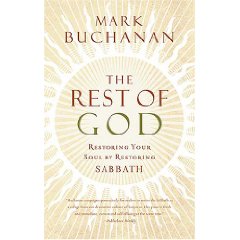
The Rest of God by March Buchanan: I’ve quoted from this before, and will again. I’m digesting it slowly. The books deals with restoring a Sabbath into our lives. Quote for the day from this book:
A Sabbath heart sanctifies time. This is not a ritual. It’s a perspective. And it’s not a shift in circumstances — you still have the same job tomorrow, the same problems with your aging parents or wayward children, the same battle looming in the church. But you make a deliberate choice to shift point of view, to come at your circumstances from a fresh angle and with greater depth of field. You choose to see your life otherwise, through a different lens, from a different standpoint, with a different mindset.
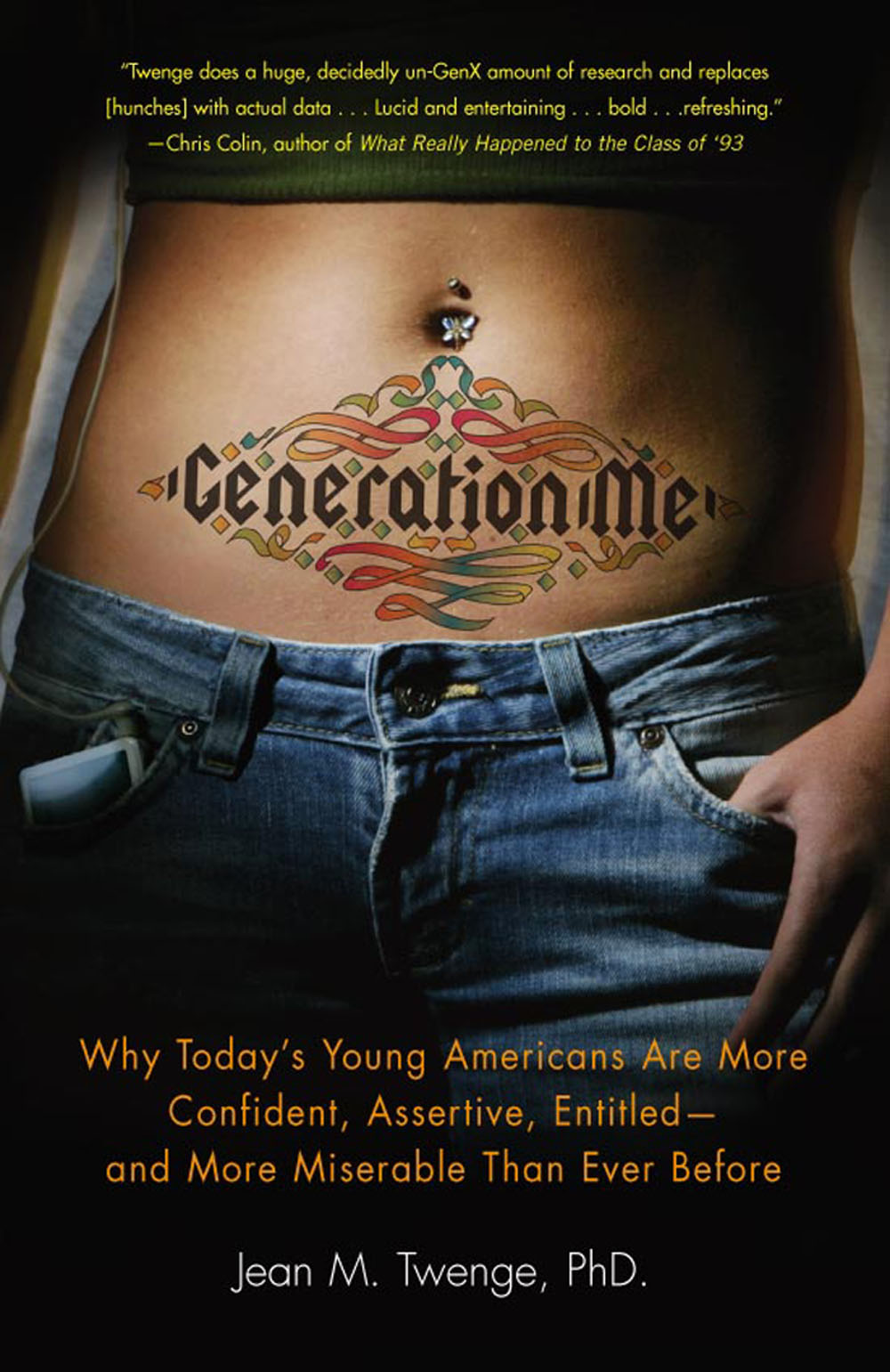
Generation Me by Jean M. Twenge: I haven’t begun this one yet, but it’s calling me with its funky cover. It deals with the peculiarities of this next generation, from a secular perspective. I thought that reading it i light of, say, Unchurched, would be interesting.
Peaks and Valleys by Spencer Johnson: This book is actually a line jumper. I bought it the other day and read it that night. Like his other books, this Spencer Johnson book is written like a parable. A young man is in the “valley” and wants to be on the mountaintop. By climbing a nearby peak, he meets a wise counselor who teaches him that the things you do while you are in the valley actually help you shorten your stay there and establish the good times on the peak that are to come. Great read. I’m still assimilating it and running it through the lens of scripture.
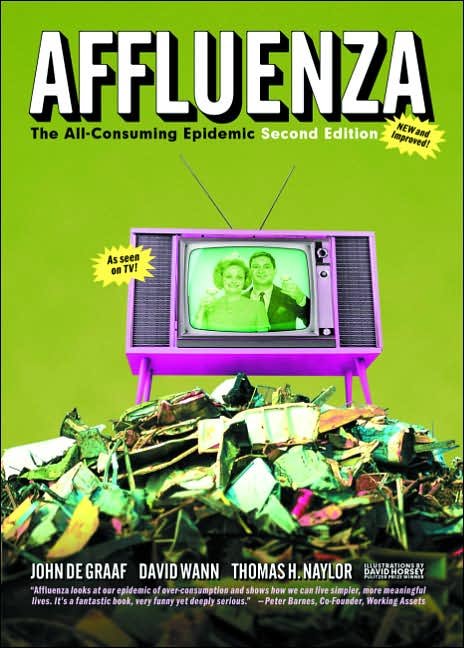
Affluenza by John DeGraff and others: I wrote about this last week. Finished it — substantially — yesterday. This is a convicting book, if a smidge liberal-minded for my taste. It has made me consider some of our lifestyle choices and best of all, offers a few simple changes to make life more enriching. That positive perspective — not a bashing for what you do now — is what drew me to this book.
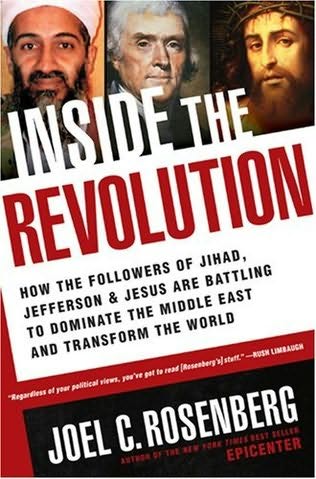
Inside the Revolution by Joel C. Rosenberg: I read everything by Rosenberg. I believe he is one of the smartest guys around. This book deals with “How the followers of Jihad, Jefferson & Jesus are battling to dominate the middle east and transform the world.” Heavy stuff, and actually a heavy (physically!) book as well.
Affluenza: we now have a terminal case

There is always a risk, as a writer, that when you write about a topic someone out there is going to say “How can YOU say such a thing…look at your own life!” This is one of those topics. We’ve all heard preachers say, “Now I’m preaching to myself here, too.” So at the outset, let me put up that disclaimer. I am preaching to myself.
I can’t watch the news anymore. Can you? Even my favorite newscasters have started issuing appologies with their broadcasts. After reading a string of companies reporting record-breaking losses, one woman looked at the camera and said, “I’m so sorry to have to read this. But you need to know what’s happening out here.” There is no longer any doubt that the financial landscape of America — the world? — has changed for the foreseeable future.
Recently I picked up the book “Affluenza” by John De Graaf, David Wann and Thomas H. Naylor. It is the kind of book that I would normally avoid like the plauge. But it was the end of a long day, and the comfy chair at Barnes and Noble was right next to a display featuring this book. To my surprise, inside the book I found a very acccurate diagnosis of our current situation (written in 2001 and updated in 2005), as well as many ways to combat the problem.
Affluenza, according to the authors, is “a painful, contagious, socially trnasmitted condition of overload, debt, anxiety and waste resulting rom the dogged pursuit of more.” Definitely the disease that got us here. As America lurches along its path, affluenza is going to sideline us for awhile as surely as a flu will land you in bed fora few days: it is the inevitable result. And there — right there in the middle of our bed-ridden downfall — is the seed of our hope. Because everything that is “normal” is about to change, leaving behind a gaping sense of need
“Normal is getting dressed in clothes that you buy for work, driving through traffic in a car that you are still paying for, in order to get to the job that you need so you can pay for the clothes, car and the house that you leave empty all day in order to afford to live in it.”
Ellen Goodman, quoted in Affluenza
The second half of Affluenza begins to discuss ways to enrich our lives, healthy choices that build emotional, spiritual and physical health into our lives. What an opportunity we have! I am more excited by the opportunities for living an incarnational kingdom life now than I was a year ago, because NOW we have neighbors who are ready to listen. Normal is gone.
The trappings of people’s status — cars, activities, clothing, — often insulate us from each other. But in the days to come we are going to see people become hungry for real connection with each other. We’ve all seen it in the aftermath of a serious illness or a death: when life comes crashing down, it’s only the people around you who matter. So get ready! Life is crashing down, and relational capital is going to be in demand. People will need each other once their bubble of self-sufficiency is burst. You can already hear it in the coffee shops, as people lament over the newspaper and the latest reports. You can see it reflected in television commercials like Target, which show the new normal as staying home and connecting. We really have turned a corner in this world of ours. I’m going to be ready to step into the gap for the kingdom.
