Catalyst Wrap Up: Day Two, Part Two

Each year Catalyst gives out a “Lifetime Achievement Award.” This award, coming from the “younger” generation of leaders, is given to a person who exemplifies leadership and outstanding body of cumulative work in the Christian world. Last year this award was given to Billy Graham. This year the Lifetime Achievement Award was given to Chuck Swindoll. What a deserved honor! At 75, he was spry and full of sparkle when he popped up those stairs to accept his award. Afterward, Chuck Swindoll delivered a talk that engaged us, challenged us, and set the bar. The highlights are below, and I should warn you that he loves lists. Lots of lists.
Things I have learned about leadership in 50 years of ministry
- It’s lonely to lead
- It’s dangerous to succeed
- It’s hardest at home (illustrated by a story of changing the battery in his fire detector while being “heckled” by his wife. It ended with a battery being thrown. He was being real.)
- It’s essential to be real (as I said!)
- It’s painful to obey
- Brokenness and failure are necessary to your character
- My attitude is more important than my actions in any given situation
- Integrity eclipses image
- God’s way is always better than my way.
“Perhaps the goal at Catalyst this year for you is to empty your hands.” - Christ likeness begins and ends with humility
“Be willing to leave the familiar methods without disturbing the biblical message. In other words, DON’T MESS WITH THE MESSAGE!”
- With every ministry, a special and unique mercy is needed.
- In every ministry, the same things must be renounced and rejected:
Hiding shameful things
Doing deceitful things
Corrupting truthful things - Through every ministry, a unique style should be pursued.
It isn’t about us.
It is about Him.
We are bond servants
Five statements for the next 50 years:
- Whatever you do, do more with others and less alone. It keeps you accountable.
- Whenever you do it, emphasize quality…not quantity.
- Wherever you go, do it the same as if you were among those who know you best. It keeps you authentic.
- Whoever may respond, keep a level head.
- However long you lead, keep on dripping with gratitude and grace.
Louie is an author and speaker and the director of the Passion Conferences. Recently he has started a local church in the Atlanta area, Passion City Church.
“Leadership is knowing and following Jesus.”
- The theme of Catalyst 09 is “On Your Mark.” To run a race, you need to know where you are going. Where are you going?
- We are all going to a common destination.
- Your life is shaped by the end you live for.
- Our common destination and goal is to see the face of the Son of God.
- His face is what we were made for. We can’t draw our life from anyone else, it is all in the smile of Jesus.
- Find the confidence and courage to be what you need to be.
- “At the end of the day, leadership is not about getting ahead, it is remember we already have one.”
Louie ended with a great analogy. We have all seen the show Extreme Makeover: Home Edition. At the end, just before the big reveal, Ty Pennington gathers with the family behind the big bus. As the crowd yells “Move That Bus!” the bus driver moves to reveal the new home while the camera stays fixed on the family and the music swells. We watch the family’s faces. And reflected there is the beauty and awe of their new home. The children whoop and holler, the momma cries, the daddy tries hard not to cry. (I usually do cry!). Only then do the cameras turn and pan the home. Our faces, said Louie, should be a bit like that. We should be reflecting the beauty and awe and grace and unfathomable magnificence of our Lord. People should say, “Wow, I’ve found God on your face.”
Closing Session — The Multiple Choice Team
I. Occasionally, there are gaps between what we expect people to do and what they actually do. This is expected and unavoidable. Sooner or later, something does not live up to your expectations or other’s expectations. This creates a gap.
A. We choose what goes in those gaps.
B. We choose to expect the best or assume the worst.
C. Two things make it difficult for us to believe the best: What I see and Who I am.
“We can choose to put ‘believe the best’ in that gap.
II. Developing a culture of trust is critical to the health and success of your organization.
A. Trust fuels productivity.
B. A culture characterized by trust attracts trustworthy people and quickly surfaces those who aren’t. Will everyone be trustworhty? No, of course not. But choosing to trust them will reveal them quickly so you can move them out of that position before they hurt your organization.
1. You will never know who you can’t trust until you trust them.
“The moment you feel the need to tightly manage someone, you might have made a hiring mistake.” Jim Collins
2. You will never know who you can trust until you trust them.
3. Trusting is risky. Refusing to trust is riskier.
C. Trust enables an organization to move faster.
“Teams use trust as currency. If it is in short supply, then the team is poor. If trust abounds, the members of the team have purchase power with each other to access each other’s gifts, talents, energy, creativity and love. The development of trust, then, becomes a significant leadership strategy.” Reggie McNeal
III. Developing a culture of trust begins with the leader.
A. Trust and suspicion are both telegraphed from the leader throughout an entire department or organization. You may think they don’t know….but they do!
B. When you can’t trust, you must choose to confront.
1. Concealed suspicion poisons the entire relationship.
“The moment there is suspicion about a person’s motives, everything he does becomes tainted.” Mahatma Gandhi
2. The consequences of confrontation are far less severe than the consequences of concealment.
C. To develop a culture of trust, leaders must be trustworthy.
Catalyst 09: Day One

Make your mark!
That’s the theme of this year’s Catalyst event in Atlanta. David and I are here to soak up the teaching, the atmosphere, the leadership skills. And there is just so much to soak up! If you imagine Thanksgiving Day, and the feeling you have in the morning as the smell of turkey starts to blend with Gramma’s squash casserole and an apple pie or two… well if you image that, you can imagine the anticipation and reality of Catalyst. It is like a day of feasting. And now, now it is after the feast and I’m sleepy and full.
Arrival at Catalyst is always exciting. There are pre-show bands playing, food, and — memorably — a helicopter drop of paratrooper Chick-fil-A cows. Unfortunately, I missed that because we were stuck in the horrendous traffic trying to turn into the convention center. Once you turned in the drive, by the way, there were pink flamingos lining the entryway. I have no idea why. But I enjoyed them!
We had a great lineup of speakers today, interspersed with legendary Catalyst activities and comedy. The day kicked off with Andy Stanley, then Jessica Jackley (founder of Kiva), Malcolm Gladwell (author of The Tipping Point, Blink and Outliers), Shane Hipps (“Flickering Pixels”), Rob Bell, Tony Dungy, Matt Chandler and Frances Chan. Unbelievable.
To get a little taste of the teaching, here are a few of my highlights from the day.
- Whose mark are you making? Yours or God’s?
- You won’t recognize your “mark” until years later. You don’t know the thing that will make the greatest difference.
- The Angel of the Lord has not come to be part of your story; he has come to invite you to be part of his story.
- Don’t just be a leader in authority, but a leader under authority.
- Who are you FOR?
- Be more concerned whose side you’re on than who’s on your side.
- Incompetence irritates me; over-confidence scares me.
- Don’t be trapped by your confidence.
- In times of crisis what we need from our leaders is humility
- A sign of over-confidence: you stop listening to those around you.
- How you say something is as important as what you say.
- The medium IS the message.
- Words invite argument, but images bypass logic and are not argued. Hence advertising.
- The ever-changing gospel never changes
- What if the gospel is a living thing rather than a lifeless artifact?
- We need gardeners, rather than guards. The gospel is more like a garden, growing and alive, than a priceless painting.
- In the gospel there is no room for fear.
Rob is an experience, more than a list of bullets! Honestly, I can’t even break his message down because he sent my mind spinning in so many directions. I did very much enjoy his advice to pastors and others very involved in the church to keep a Sabbath and take care of your family first.
- God created everything.
- Everything creates a sense of worship in the human soul…even a good meal or a beautiful piece of music.
- What God said he was going to do, he’s doing right now! He is doing it!
- Get up, repent and mature… learn to live in deeper waters of intimacy.
- Fix your eyes on Jesus.
Francis Chan and Aaron Keyes
Day one of Catalyst 09 ended with a worship service and communion. It is difficult to make 12,500 people feel intimate, but somehow they did. Aaron Keyes is an amazing worship leader. He happens to be the worship pastor at Buddy Hoffman’s church, Grace Fellowship. If you have read Coffee Shop Journal at all you know that this is my “home” church in Atlanta. We love Grace Fellowship, and it felt like getting to see your own team play for the World Series. Aaron’s music is worship music, and worship we did. When Francis Chan got up to speak, he read the scriptures over us. Yes, that’s about it. He read the scriptures over us because he realized that to display the grace of God, you must soak in the grace of God. In the end, we took communion together and stayed to worship as a (very big) family. It was intense and powerful and felt like the Spirit was pouring rain down on us after a long, long day.
I can’t even begin to imagine day two!
Twitter, Andy Stanley and Spare Change

I have a Twitter friend named @invisiblepeople. This person whom I have never met profiles the faces of homeless people across the country. Every time I see one of his or her status’s cross my phone, I’m reminded to stop, be thankful, get involved. Twitter has helped me “see” homelessness more than ever.
Last week David and I were wandering around downtown Boston waiting for my kids. We walked by a homeless man selling Boston’s homeless newspaper, Spare change. We’ve learned, as you know. We stopped and bought a couple of copies of the paper before continuing our stroll through the streets.
Later that day I was reading Andy Stanley’s “Principle of the Path.” Suddenly something he said jumped off the page. It was simple: you really “see” what you focus on. Not a radical concept, but it convicted me. Because all day I was realizing I had bought my two newspapers, but I didn’t really stop to see the man selling them. We exchanged very few words; I don’t remember what he looks like. I devalued that man because I ddn’t stop to see him.
Since that day I’ve heard several sermons about invisible people. Reading the gospel of John, I’ve watched Jesus stop and focus on the people other people miss. And there’s my old Twitter friend @invisiblepeople sending me constant reminders. I know when to take a hint.
This weekend is the large Florida Parent Educators Association homeschool conference. It’s my — and I’m guessing here — eleventh year attending? I have a feeling there’s a new assignment waiting for me here. And I have a feeling I need to keep my eyes wide open so I don’t miss it.
The next generation

Grace Fellowship Church -- So that the next generation may know....
“The next big idea for the church isn’t going to come from the previous generation. Start hanging out with your student ministries and make space for them to dream.”
— Andy Stanley
Catalyst 08: Andy Stanley Closing Session
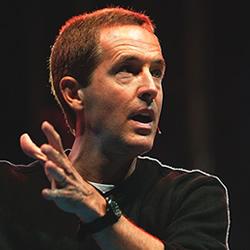
Good things come to those who wait. Or stay. Andy Stanley closed out Catalyst 08 with an amazing reflection of where he and his staff at Northpoint are in their thinking process. He gave us five quotes that he grapples with on a daily basis. The thought processes inspired by these quotes are driving the next steps of Northpoint, Buckhead etc. David and I found a lot to think about in this session, and that process has just begun. Here are the five quotes and thoughts that Andy Stanley and his staff are working through.
“To reach people no one else is reaching, we must do things no one else is doing.”
— Craig Groeschel
- There are people who will never step through the doors of our churches, no matter how cool our churches are. How will we reach them? We have to think of brand new ways of going to them, even if “traditional church people” don’t necessarily like them. In response to this quote, Northpoint has tried several projects: Buckhead Music Project, a new Northpoint Spanish service, Google Ads, Letters to the Next President. These are just the first fruits of thinking deeply about questions that bother you.
- Some people won’t donate more money for church operational costs, but they will donate money to try something radically new to reach people no one has reached.
Takeaway: Become preoccupied with who you haven’t reached as opposed to those you want to keep.
“The next generation product almost never comes from the previous generation.”
— Focus, Al Reis
- If you are 45 or older, the next great idea most likely won’t come from you. Your job, instead, is to constantly seek out the next generation and hear what they are thinking. Enable their visions to come true. Go look to the 20 year olds. If you want to find examples of radically different thinking, you should be paying attention to what your Student Ministries guys are talking about.
- Don’t do to the next generation what was done to yours. Don’t say, “We don’t do things like that.” Stop and think about what they are proposing. Give them space, money, social capital and the freedom to fail.
Takeaway: Be a student, not a critic
“What do I believe is impossible to do in my field…but if it could be done would fundamentally change my business?”
— Future Edge/The Paradigm Book, Joel Barker
- One of the stickiest problems in the previous generation of church leadership and growth was requiring a great leader to also be a great communicator. Those are two skills, and not that many people have both. What if a church leader didn’t have to beat the brunt of communicating?
- The leader/communicator issue was solved by the multi-site video venue. Now a teaching pastor can communicate well, while each campus can be led by a great leader. This fundamentally changed church growth.
- A current sticky problem to ponder: church plants need space, while some older churches are underutilizing their real estate. How do you bring those together?
Takeaway: Pay attention to people who are breaking the rules.
“If we got kicked out and the board brought in a new CEO, what would he do? Why shouldn’t we walk out the door, come back in, and do it ourselves?”
— Only the Paranoid Survive, Andy Grove
- The first thing an outsider might say about your organization is “Why in the world are you doing that?” We fall in love with the way we do things and forget to constantly reevaluate. The fact of life is that usually without pain, there is no pain. And usually that pain is financial.
- Where are we manufacturing energy? These are the programs that we do because we do. We aren’t all that excited about them, but it is what we do. We just manufacture energy. Get rid of them.
- It is painful to change. Yes, your context makes it difficult to get rid of this program, or that. It is difficult everywhere. It always hurts.
Takeaway: Acknowledge what’s not working, and own up to why you are to do anything about it.
“When your memories exceed your dreams, the end is near.”
— Michael Hammer
- We don’t want to be an expert on the previous generation!
- Celebrate the past, yes, but don’t be so celebratory that you forget the future.
- Are you willing to be invested in the future?
- Complacency breeds failure.
Takeaway: Don’t let success overshadow your vision.
Andy wrapped up by saying that in these very turbulent times it will take courageous leadership to leverage the situation in this country. Yes, people turn to God when times are difficult. Are we ready for them to do that? The fundamental problem in this country is not financial or political, it is a heart issue. It is time to step up and lead. Lead with whatever gift God has given you. Now is the time to be bold in your leadership. Be bold in your gift. Now go out and lead.
Catalyst ’08: Andy Stanley

Believe it or not, this was the first time I’ve ever heard Andy Stanley speak! After the amazing worship, we were ready to hear a message and boy did we get one. Andy spoke on Nehemiah, and the project of rebuilding the wall of Jerusalem. Here are some key points that struck home to me:
- Once you become an adult, rarely do the people who actually influence us have any real authority over us. They influence us because of their moral authority, instead. This is — for better or worse — also true of our own influence. In reality, we can’t MAKE anyone do anything. That is why your own moral authority is so crucial.
- You achieve moral authority when people perceive that there is an alignment between the creed and the deed. In other words, you walk the talk. Without this alignment you would have a credibility gap.
- Nehemiah had moral authority because for 12 years he chose not to take his “fair share” of the food and land. He chose to forgo power (land) in order to build his authority.
- All we really have is influence — everyone is a volunteer! Build your authenticity.
- These are the areas in which we need moral authority:
- Forgiveness: We have been forgiven, therefore we should forgive. If you are bitter, you lose your moral authority.
- Family: Prioritize your family. “Don’t exchange a role no one else can play (parent to your children) for a role anyone else can play (pastor etc.).”
- Finances: Your finances must be in order if you are working in a ministry where people give money. You need moral authority. If you want to lead generous people, be generous. “Give, Save, live on the rest.”
