Just a moment in time… Q LA
Walking home from a film viewing tonight David and I saw a homeless (?) man going through a garbage can on the street corner. He looked pleased as he pulled a book from the trash. It was a Q group study booklet. The title was "Engaging Culture in a Post-Modern World." He put the book in his backpack and wandered off. There was something surreal about the moment. I'm still wondering what he thought about the message of the book.
Q LA Day One
If only you could see me now. I am sitting, staring, watching my computer screen do nothing. My mind looks like it has turned to mush, but it hasn’t. Perhaps a better metaphor would be this: my mind is whirling the multi-colored wheel of overload that you see on your Mac sometimes. In my past experience that wheel of “death” as we call it in our house comes just before a major system shut down. Yes, that’s an accurate metaphor. I’ll need a major system shutdown before long.
Q does that to you.
Today my brain has reengaged with Bobette Buster on the development of story, learned about systems and chaos as applied to artwork, pondered what works of art will be trophies laid down at Jesus feet and learned why the question of same-sex marriage is really the wrong question to be asking in the first place. I’ve learned that more and more people choose “none” to describe their religion of choice, and also learned that as a woman it’s finally appropriate to speak in terms of callings. I’ve pondered mental illness and the role of friendship in overcoming it. And all that before lunch.
I’ve met people transforming culture, transforming poverty, transforming our responses to both culture and poverty. In fact, everyone seems to be transforming something at Q. Perhaps Bobette was right when she said that every good story is about reinvention or redemption.
In the middle of it all, my city was bombed. The spot where I bring my visitors to see the finish line, where we joke about finally crossing the marathon line.
It’s all a little much to process today. So perhaps I won’t. Instead…here you can read some of my favorite quotes from the day.
“At the time of his death, 2/3 of Steve Job’s fortune was made from Story. Silcon Valley was just landfill.” — Bobette Buster
“Art comes from freedom within limits.” — Linnea Spransey
“From an economic standpoint, society can not afford the breakdown of the family.” — Dale Kuehne
“Secrets lose power when they exit the dark.” — Rebekah Lyons
“Story is the most powerful thing we possess. Story leads to awareness. Awareness leads to attitude change. Attitude change leads to action. Never say it’s ‘just an awareness campaign.'” — Jason Russell
“What if what we’ve been led to expect out of life — the New American Dream of realizing perfection — is false? What if the people who told it to us are wrong? Is there more to life?” –Tim Chaddick
“Have we exposed the country to such a weakened virus of Christianity that we’ve vaccinated them instead of infecting them?” — Richard Sterns
“The most dangerous word in the gospel is TODAY.” — Margaret Feinberg
“Go visit the holy sepulcher. But then get out. What are you going to do where He is not?” — Father Elias Chocour
“What if…the church were to participate in the creation of the best of everything? What if….we realized that the future is the integration and coming together of human will and Divine art?” — Erwin McManus
“Realize that others will never care about your vision the same way you do. And that’s OK.” — Brad Lomenick
Epiphany: New York City and Q and a Pakistani

The Freedom Tower...still only about 2/3 of its eventual height!
It was classic New York City: crossing the bridge into the city and watching the magnificent skyline against the perfect fall sky. I couldn’t have scripted the ride any better. I pointed out a few of the landmark buildings to Kylie and Jillian, even though both of them had been here before and were pretty much ready to roll their eyes in my direction at any minute. They do that once in awhile when I’m being, well, Mom.
“Over there, to the left…do you see the construction lights?”
I was startled by our cab driver jumping into the conversation. David found the lights he was pointing out.
“That is the Freedom Tower. At Ground Zero.”
It was obvious that the driver was proud of the tower. Having just watched Rising (a documentary about the tower project), I was, too. So thrilled to see it start to take its place in the iconic skyline. I pondered the tower. To me it represents the God-given drive in humans to create, and recreate, their world. It represents the refusal to let evil triumph. It represents the global community that coalesced around the project, and the people who lost their lives in that spot. It also represents the people who are giving their lives to healing. Healing the people, healing the city, healing the skyline. The Freedom Tower. What a great name.
The driver wasn’t quite finished yet.
“I’ve been wondering,” he said after revealing he was from Pakistan, “about the difference between some of your words. Can you explain to me the difference between Liberty and Freedom?”
Wow.
Not as easy as it sounds at first. David and I both took a crack at it, and the conversation filled the ride to the hotel. It turns out that our Pakistani driver had a master’s degree in American History, a degree he earned back in Pakistan as he anticipated moving to America. For just a few moments we were able to see New York City through the eyes of this man, the eyes of a man who worked hard and sacrificed everything to point out the construction lights on the floors of the Freedom Tower.
I think that’s what I love about New York City. Things aren’t always what they seem. Sometimes the epiphany — the moment of blinding insight — comes from the most unlikely sources. An epiphany can be around every corner. Probably is. If you look for it.
We were heading to a conference on using “Story” to create epiphanies. David and I would spend days learning from experts how to create compelling stories. It was amazing and overwhelming and full of useful information.
But the epiphany moment of our Qideas Epiphany Workshop was delivered by a Pakistani driver crossing the bridge into a city he couldn’t wait to show us.
Some of Q Conference 2010 Day 2
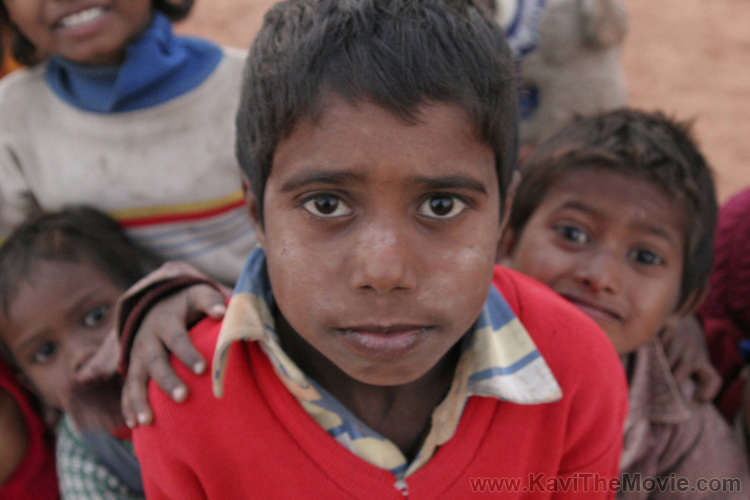
Focusing on Fatherlessness and child slavery, day two was intense. Image from Kavi, the movie
I’d like to get through a few more of the notes from the Q Conference. For those of you who have had time to wonder, I’ve been pretty much out of commission since the conference. That beautiful Chicago spring led to a massive allergy attack, which has led to lingering illness ever since. I’ve also had a quick trip to Atlanta to pick my daughter up from her sophomore year of college, so only now am I getting around to Q processing!
The afternoon of Day Two was essentially dedicated to the growing crisis of fatherlessness in America and around the world.
Roland Warren – Responding to our Fatherless
National Fatherhood Initiative
The way we relate to each other is really based on our concept of fatherhood, and fatherhood is under attack today. The epidemic of father absence is part of the enemy’s attack plan today. People today need to understand that God is a good father. They need to know what that means.
The baptism of Jesus gives us a good example of the fatherhood of God in action. As Jesus was being baptized, he heard the Father say “This is my beloved son in whom I am well pleased.” God the Father was affirming his son, publicly. Roland pointed out that this event took place right before Jesus was tempted in the desert. How important it is that we affirm our children before they face their temptations! Roland also pointed out another example of fatherhood, in the life of the young DC Sniper. “I had a hole in my soul,” he said,”That (the older man who encouraged him to join him in the shooting rampage) knew how to exploit. He knew my weakness. He knew I didn’t have a father.” This is a worldwide issue that requires a worldwide response. Finally, Roland pointed out that in most churches, the men’s ministry has nothing to do with the student ministry, but connecting the two could provide the mentors that our kids need.
Panel on Fatherlessness
John Sowers – The Mentoring Project
Esther Fleece – Focus on the Family
Marc Andreas – Bethany Christian Services
Jason Locy – Fivestone (Check his site for the video they produced for Bethany Christian Services)
The panel on fatherlessness wrapped up with a call to action to our churches and ourselves. Q would like every person to get involved in relieving the plight of fatherlessness. They offer four concrete suggestions.
- Create a city-wide mentoring initiative (goal – 10 cities)
- Foster 120 children
- Support 300 adoptive families
- Build 200 houses and orphanages in Haiti
Finally there was an individual challenge to everyone: can you give just three minutes a month to publicizing the crisis of fatherlessness?
Soledad OBrien and Jonathan Olinger – Discover the Rescued
Soledad O’Brien has been everywhere on CNN the past week with her documentary “Rescued” which explores the orphans and trafficked children in Haiti. If you haven’t seen it yet, get online and find it or look at CNN’s schedule for a rebroadcast. I watched it today as I prayed for my daughter and the team she is with in Haiti right now. It’s powerful. You can find some backstory and clips here. Listening to Soledad and Jonathan speak was powerful. Jonathan had been in Haiti documenting the stories he’d found in the orphanages long before the earthquake. When he met Soledad and joined forces with CNN, his stories have traveled around the world. One quote from Soledad stuck with me: “I’m bringing my 9 year old daughter back to Haiti to work in the orphanage with me. I want her to know that she is not just an American citizen, she is a global citizen.” This tragedy affects everyone.
Roger Sandberg – Relief and Redevelopment
Medair.org
Roger is one of those Chuck Norris kind of guys that is the first guy in after a natural disaster. His organization and Roger’s experiences helped us process the difference between immediate relief effort and redevelopment. There are so many issues facing those interested in helping after the initial rescue phase. Sometimes that help can hurt, and sometimes it can hinder the local economy from doing on its own what it needs to do. There are phases of aid: emergency relief (search and rescue), rehabilitation (transitional) and development (limited outside support). Knowing what kind of aid is needed leads to better financial decision in allocating aid money.
Brian McLaren – Conversations on being a heretic
Brian is one of those polarizing authors and pastors. In this afternoon session, he sat down with Scott McKnight and had a discussion about some of his more controversial subjects. Quite honestly, dear readers, this is not an issue that I was following before the discussion. As a result, I felt like I was listening to two friends discussing some party that I’d not attended in the first place. I’m sure that some of the other Q recaps have better information for you. I was intrigued to hear McLaren, having heard bits of his reputation. I was impressed with the fact that while McKnight and McLaren obviously had a few points of disagreement, their conversation was congenial and profitable. I can’t help but think that if we could sit and listen to people we “disagree” with before we write about them or judge them, we might find more areas of common ground than we suspected. So that’s my take-away from the McKnight-McLaren discussion: get to know them before you judge. Not too shabby, actually.
Gregg Helvey – The Story of Justice
My claim to fame: riding in the elevator at the hotel with Greg and finding out that he had been at the Oscars before his presentation. Gregg developed a short film, Kavi, which focuses on the child slave trade in India. We got to screen the movie after dinner, and it is amazing. Gregg says in the Q booklet, “I first heard about modern-day slavery back in 2001 and I was shocked to learn that there are more slaves on the earth today than there were in the entire trans-Atlantic slave trade. I went to India to see this firsthand. There, I traveled to more than twenty brick factories that all employed young boys in forced labor. I knew that the boys I met and the stories I heard would give my film the authenticity I needed.” At Q in NYC two years ago we heard Gregg discuss his movie in production. It was a privilege to hear of the miracle of its popularity and its Oscar nomination this year.
Go here to read more about Kavi, then download it on iTunes or buy the DVD.
Q Conference 2010 Day 2 session one
Jonathan Merritt – “Creation Care and the Gospel”
I really enjoyed Jonathan’s presentation, which began with the premise that there were three relationships broken in the garden: our relationships with God, each other, and creation. Restoring the latter, our relationship with creation, is Jonathan’s passion. He has written a book, Green Like God, Unlocking the Divine Plan for our Planet. I’ve already downloaded it on my phone and can’t wait to read it! You can go here to learn more about Jonathan and his latest book.
Phyllis Tickle – “Rediscovering the Ancient Practices”
The ancient practices, by the way, are really disciplines. We’ve substituted the word practices to make it easier to approach! To begin with, remember that we are all dual citizens of both heaven and earth. The practices are given to us to remind us of this.
The Seven Ancient Practices (the first three govern our body, the last four govern our time):
- Tithing, fasting and the sacred meal (which is the most intimate thing we can do with each other in community) are the first three.
- Fixed Hour Prayer – governs our day. Join with people all over the globe who pray in a cascading gathering of prayer in each time zone.
- Sabbath – governs our week.
- Liturgical Prayer – governs the year.
- Pilgrimage – once or twice in a lifetime. We have lost the sense of faith incarnate, the sense of journey to a holy place.
Phyllis spent some time further describing Fixed Hour Prayer, which is a habit from the earliest days. Every three hours you pray through the Daily Office, joining your voice with all the unseen Christians in your time zone. As you finish your prayers, the next time zone is soon to begin them. it rings the globe and draws us all together.
Matthew Sleeth – “Observing the Sabbath”
Rest just doesn’t happen in a 24/7 world unless you plan for it. But if you observe a Sabbath day, over the course of a lifetime you will gain an average of 11 years with the Lord! The intent of the Sabbath is to save us, to refresh us. To figure out what counts as work, figure out what feels like work to you and don’t do it. Liberating! Matthew has a new book, entitled 24/6, coming out soon.
Dr. Alistair McGrath – “Overcoming the Faith and Science Divide”
The bottom line of this presentation was that Christians need to interact more with the sciences and scientists.
- Christianity makes sense in itself, but it also make sense of everything else.
- Simple messages, such as the “God Delusion” by Hawkins, get heard. We need to counter that with the message of the Gospel.
- We need apologetics – identify areas of concern and work out how we discuss them.
- We need to empower Christian sscientists and help them to build a vision for how they can make a difference.
- Begin by making the point that science is not complete.
Tyler Wigg-Stevenson – “The Two Futures Project”
Fear and love can not coexist. Transform fear to courage. This presentation focused on the eliminaton of nuclear weapons and included a preview of the documentary Countdown to Zero.
Sean Womack – “Don’t Eat the Food”
“I was fired from my position as a high-ranking WalMart executive because I had an affair with my boss.” This was how Sean Womack began what was undoubtably the most powerful presentation of the day. Sean ended up separated from all that made his life rich: his wife and children, his job. In the midst of this difficult time, Sean’s wife chose not to let him go. Instead, basing her faith on Nehemiah rebuilding the walls of Jerusalem in 52 days, she decided to fast and pray with her children for him for 52 days. And then came restoration. Sean had the scales drop off his eyes. The Lord showed him the little moments, little decisions, that led to the implosion of his life. That was the beginning of rebuilding the walls.
During this time, the story of Daniel in Babylon was crucial to Sean. Using that story, he made several points.
- Daniel didn’t do it alone – he had friends willing to go into the furnace, even without him.
- Daniel didn’t eat the food, knowing it would defile his heart. Are we eating the food of the culture around us?
- Daniel didn’t bow down to the foreign gods.
Mike Foster – “People of the Second Chance”
Broken people are beautiful. People of the Second Chance’s brand is failure, pure and simple. Grace is Christianity’s killer app. We are called to show radical grace to each other. In society, failure is what makes the news. We live in a culture of judgement. Grace is scarce…which makes it a great opportunity to show it! It can transform everything.
“We don’t drift into better behaviors.” (Bill Hybels) We need to be intentional.
1. We need to GIVE a second chance. Don’t hoard grace! It is supposed to come in and flow right back out of us. We all need grace.
2. We need to CHASE the prodigals. There are too many men and women standing on the sidelines. Their story does not — should not — end in the valley. We can either be part of the judgement culture or part of the grace solution.
Richard Florida – “Resetting the Creative Economy”
Every human being is and should be creative! The communities that harness the power of that creativity will prosper. We have lived through a huge generational shift in the last two years. In the past we worked with our bodies, the golden age of opportunity. Now we work with our minds. Shared creativity makes us human.
The old order valued material success. It was the American Dream. Now we no longer define success by material goods. Instead, we want three things:
- Meaningful, challenging, purposeful, engaging work. And we want control of our day to day work life.
- Social relationships. We want to live in a connected, engaged community of more than just family members.
- Being in a place, a community, that we love. We want it to be walkable, human sized.
Gabe Lyons wrapped up this session by reminding us that all the elements Richard Florida listed for human happiness and meaning can and are found within the body of the church.
Richard’s new book: “The Great Reset.”
Q Conference Day One Part two!
Sitting in the sessions at Q is like watching one of those stock tickers in Times Square or on the bottom of the financial channels. So much information is flying by at the speed of light: it’s hard to pick what stands out in the midst of overwhelming information. And yet the second most valuable part of Q — for me — is the thoughts I think while that information flow is passing over me. So what I’m saying is that these little summaries represent very little of the actual content today. They are simply what stood out to me at the time. Hopefully there’s something interesting for you!
John Golden “Land of a Thousand Hills Coffee” spoke about the “inklings” that God gives us. You know what they are: the leanings of our hearts when we daydream about what-if and what-could-be. God calls you through that inkling and then develops your passions and your proficiencies until you take action. Land of a Thousand Hills is a great “cause” coffee — fair trade and Kingdom minded.
Sajan George – “The Future of Education”
Sajan is a man with turnaround expertise. When God called him, he chose to apply his turnaround skills to the public school systems. I love the idea of actually changing an institution, and being brave enough to tackle it as a redemptive representation of the gospel. His analysis of education jives with what I’ve noticed in our homeschooling and schooling journey as well: education is a design issue, and it needs a new design. In this digital, technologically advanced age it is time to let education be customized to each individual student while simultaneously raising the bar on academic standards even for those in the lower income groups. Education must be restored back to what was working in the past as well as renewed, or enhanced with the best of what is new. Great quote: “Your zipcode should not determine your success in life.”
Bryan Coley – “Evolution of a Voice”
This was a 9 minute presentation, which is frustrating. It takes more than 9 minutes to develop an idea. Bryan Coley runs a writing mentoring group in the film arts. For every sub-group of people, he says, there is a progression toward finding their voice in the culture. As the voice grows, you get to a tipping point where the culture will begin to understand your subculture. For the Christian subculture in the movies, that time is now. The Passion followed by The Blind Side opens up the opportunity for further high quality movies and to further the Christian voice. And then the presentation ended. Would have loved to hear more.
Jo Saxton – “Being Provoked to Engage”
Jo gave a great presentation today using the metaphor of earthquakes. There is a cultural earthquake going on, and people need to know how to engage in the rescue efforts following it. Every day we run into people in the middle of their own personal earthquakes. Here is what we need to give them.
1. Compassion – This is when we are in survival mode and taking care of the immediate needs. An interesting question she posed: “What is the limit to your compassion?” We know that we shouldn’t have a limit, but examine yourself. It’s worth the thought process.
2. Communities – People will not be attracted to a cement building in the middle of an earthquake. It doesn’t feel safe. We need to go out into the community with tents…bring the effort where the people are. In other words, live your relationships with with purpose. Share life together, loving God and loving people.
3. Connecting story – People need to talk and make sense of what they have experienced. They need to know that what they have gone through is part of what we have all gone through. Their story is one of redemption, not one of loss. Connect them to their redemption story.
4. Compass – Have you noticed that maps are out of date after an earthquake? The landscape changes radically, and maps (the way we used to do things) are out of date. A compass is what you need…something that points to true north. Jesus is that compass.
Jo concluded by asking some questions.
“Would you have come to find me in the rubble?”
“Would you have listened to my screaming for as long as it took?”
“Will you stay long enough to connect me to my story?
“I don’t need another program…I need a life.”
Scott McKnight “Did Jesus preach the Gospel?”
Scott’s presentation focused on realizing that words have particular meanings, and that if we lose those meanings we lose the sense of what Jesus meant. In this case he was referring to the word “Gospel.” In short (and I know I’m butchering this…sorry Scott if you ever read this!), the gospel is NOT the biblical narrative, the plan of salvation or a method of persuasion. What it is is the announcement of the birth, life, death and resurrection of Jesus. In the end we need to simply tell the story of Jesus.
Mark Regnerus “Saving marriage before it begins”
Mark spoke on the state of sexual health and purity in both society at large and the Christian community in particular from a social scientist’s perspective. It was a sobering discussion. Two statistics that popped out at me:
35% of male’s relationships (aged 18-23) with the opposite sex become sexual within two weeks. In the Christian community that is 28%. 48% (and 41% for the Christian community) become sexual within a month.
Males are choosing to remain single because the “price” of sex has gone down so much. They no longer “need” to get married to have sex. At the same time, we are encouraging our kids to waiting longer before marrying. This sends a disastrous message that marriage is not valued. Our kids become defensive about wanting to get married. We need to push back against this cultural trend.
Buddy Hoffman – “Engaging Islam”
Yay Buddy! It was a privilege to come here Buddy Hoffman speak about his ministry to the Muslim world. Unfortunately, he was given a 9 minute time slot and you already know how I feel about those. Buddy presented the simple idea that Muslims are seeking the straight path to God, and their own religion’s background can provide the common starting point for a deep conversation. Go to Buddy’s website to find out more.
