Community life: where’s your place?

The Third Place. Places I want to live. Community. Where is my place?
Places have played a huge role in Coffee Shop Journal and my life as an adult. I am very place oriented, and one of the “tensions” of my adult life has been that I feel wired for one type of community, and find myself living and called to another. I am wired for the types of places you find “up north”: places that have centers, community, people who are bound together by their inhabiting a place. Instead I live in the midst of the new south Florida: rootless people and places that are designed for shopping and cars. I do both of those things very well, by the way, so it isn’t entirely a mismatch!
Lately I’ve been reading the book “11: indispensable relationships you can’t be without” by Leonard Sweet. Most of his chapters are about biblical relationship types, and why we need to include them in our lives today. These are good chapters, and I have several blog posts coming about them. But today I am skipping over all those and jumping to his chapter on relationship with place: you need a Jerusalem in your life. Says the author,
there is a complex relationship between geography and theology, between coordinates and creativity, your commitmnt to place and your commitment to spiritual practices, your philosophy and your placeent.
In other words, your place matters. The place you grew up in (north, for me) shapes who you are, your giftings, your tastes. The place you live in shapes your ministry, who you are with, what you celebrate. Place is important. “And that’s how it should be: no more smug attempts at leaving and forgetting the places that have shaped us — that continue to shape us.” says Sweet.
And yet it is that disconnect to place that often marks our postmodern society. It is why we are restless and rootless, and why we are consciously creating new rituals to connect us to our places. There are so many implications for that longing for place, implications for how we live our lives and how we “do” church.
So with apologies to Leonard Sweet for ripping off his chapter and distilling my own thoughts into it, here are some bullet points that are jumping out at me today. Consider them topics to be thought about, not answers to act on.
- Be local. Commit to being where you are, diving in and embracing what is local around you.
- Life boils down to either “moving-in” stories or “moving-on” stories. Which one are you in?
- Homecoming is often what makes and shapes the journey–even travel has more to do with home than away.
- “Place” is where we feel strong and secure, able to live life.
- How do we create “place” for others? Can we share room in our “place”?
- “I want a home-cooked life.” Love that quote…so full of meaning. And I share the thought, too. Me too!
- Benedictine monks commit to “obedience, stability and community” in their orders. In other words, spiritual life lived out in a place.
- Sometimes “going” (as in the great commission) is best carried out by “staying.”
- Eat, shop and play local.
- Let the place where you are change you and become part of you.
- Overcome your nature deficit and connect that to your spiritual life. God created fullness of experience.
- Honor the experiences God sends by being fully present in them: eat the food, drink the drink, linger at the table.
- Create homecoming rituals that celebrate the uniqueness of your place.
The Tangible Kingdom Primer: book review

Recently I received a copy of The Tangible Kingdom Primer to review here on Coffee Shop Journal. Usually reviewing a book is a straightforward thing: you read it, you decide if you like it or not, and you write about it. The moment the Primer arrived in the mail, however, I knew I was in trouble. This is not the kind of book you can read and forget. It’s a commitment.
The Tangible Kingdom Primer is designed as a small group, communal activity. It’s a wire-bound workbook, divided into seven days of experiences each week. But it is also more than that. “The Tangible Kingdom Primer is about learning how to live in the Kingdom and how to create pathways for others to experience it along with you.” This is one of those books that you have to live out and live in for awhile. Frankly, it scares me. I can’t wait to dig in.
The Primer is designed for an incarnational community, or in simple terms, a group of people who are committed to their spiritual growth together. Really together. Radically together. This is a handbook for how to form that community, and — the missing link in so many small groups — how to bring action and change to that group. There’s solid information here, but there is also motivation and meditation. Days are devoted to concepts, meditation, action, change, community and even rest. It’s kind of like — wait for it — life in the Kingdom.
So in keeping with the foundational concept that life in the kingdom is a journey, this review is going to be a journey, too. I’m going to work through this primer and share what I learn here on the blog. I’m hoping, though I don’ t know if this will work, to have companions on this trip. I’d like to find a small group of people willing to take this trip with us. In any case, I’m ready to go. So go find a copy of The Tangible Kingdom Primer and jump in the journey with me. I leave you with one more quote from the prologue, which is where I find myself literally and metaphorically.
“Everyone is talking about community Everyone seems to want it, most complain if they don’t find it, but it’s harder to pull off than you’d think. People complain of time constraints, busyness, fear, and often have memories of community gone bad. We’ve got children to deal with. Some people struggle to relate well socially. We’re often 30 minutes drive or more away from people we like to hang out with. We’re stressed about money. We overwork, and when we do get some free time, we have a hard time sharing that time with others. Sure, we all know we need this thing called “community” and we even have some inklings that tell us that our friends need it too. Yet, a Grand Canyon-sized gap exists between our hopes and our realities.”
What do you think, you all? Who’s in with me?
To purchase the Tangible Kingdom Primer, go to this link. I was unable to find it on Amazon, so I couldn’t give you all a link straight through. But it’s available on the Tangible Kingdom site.
Related links from Coffee Shop Journal on The Tangible Kingdom:
The Tangible Kingdom Without Words
Snapshots at St. Arbucks: Book Review

Within minutes of meeting some people you know you have found a kindred soul, a new “tribe” member, a person who shares so much of your outlook that you know time and distance can’t erase your friendship. I have been blessed by several of those in my life, including one with whom I’ve lost contact. Seems impossible not to be able to find someone in this digital age, but i can’t find Denise, one of my bridesmaids.
Recently I “met” another tribe member of mine, R.G. Ryan. He wrote a book called “Snapshots at St. Arbucks.” Having wandered across Coffee Shop Journal, he contacted me via comments and email. He recognized the kinship as well. We are a rare group, R.G. and me. We are the people who sit at Starbucks and watch the rest of you. We know your stories, even if we’ve made them up on the evidence available. We see life stories in your stories. I share them here, and R.G. shares them on both is blog and in his amazing, wonderful, makes-me-cry-and-laugh book. Go to the sidebar now and click Snapshots to buy it. Then come back and read the rest of this review.
Snapshots at St. Arbucks is just what I’ve described: R.G.’s observations during his time spent at Starbucks. Sometimes he is joined by his beloved bride, sometimes his his “disgustingly good-looking African-American friend.” Sometimes he is joined by the people nearby as life’s little dramas are played out — as they are — around him. R.G. captures it all: the desperate husband landing the job he needed so much, the doggies wars on the patio, the littlest Starbucks fans trying to make their little voices heard. He writes in short vignettes. And running through all his St. Arbucks wanderings is the message of hope, purpose, God’s love and man’s love. R.G. used to be an L.A. record producer, and his background leads to a creative approach to life around him. I tried — very hard — to savor this book slowly, like a friend you only meet for coffee once every week or so. It didn’t work. I stopped into Jeremy’s Starbucks (seemed appropriate) and downed this book in one sitting. I just looked a little weird sniffling once in awhile.
I’ll share one of my favorite lessons from R.G. today (though I suspect there are more to come!). R.G., his wife, Eddie and his wife are all sitting at a Starbucks enjoying music during a weekend trip. The problem was, the music was grating on their nerves. As they got up to go, the band took a break. One of the members recognized R.G., who had signed him as part of a band much earlier in life. Now, this band member was playing with pick-up players in Starbucks, his dream of the big time obviously long gone. To R.G., this man was now obviously empty, used up, without that spark of life in his eyes. This made R.G. think about his own life.
“He was once young and filled with dreams and a fierce ambition. In fact at the time I produced their demo the dreams were still very much alive.”
Cheri knows me well enough to understand where I was going.
“And now he’s empty?”
Yeah, but it’s a different kind of empty. There’s an empty that comes from being poured out,” I glanced at Eddie, “Like at the end of a really good show where you’ve given it all you had.”
Sylvie said hurriedly, “Let me take a crack at this. The other kind of empty is the one where life has just sucked it all out of you to the point that there’s nothing left.”
That passage hit me like a ton of bricks. So many times I do feel as if I am empty, poured out and dry. But I know that most of the time (not always) it is because I’ve chosen to give it all I had. The alternative is to be empty because it’s all sucked out of you. Not much of a choice, is it? R.G. encouraged me in just those few words to keep on giving, keep on pouring. Thanks, R.G..
I loved this book immediately, like an old friend. It’s not getting filed on my bookshelves; it’s opened almost every day. I can’t imagine higher praise.
Here is the link to R.G.’s site:
John Maxwell: Build Your Dream Conference 2009, WPB

Headed to North Florida, but wanted to give you a heads up on next week:
John Maxwell will be doing a one day seminar at our church again this year. The conference is called “Build Your Dream Conference 2009” He will be focusing on his latest book, Put Your Dream to the Test. I’ll be there all day blogging and twittering, but if anyone is in the area, come on down! This annual John Maxwell day is one of the beautiful parts of having him on our teaching staff! I learned my lesson last year, however…parking will be a bear.
Are any of you reading John’s new book? John has a twitter topic going to share inspiring dream quotes and comments. You can find it by searching in Twitter on #dreamtest. John also Twitters at @johncmaxwell.
Generation Me Review: what do you want to be?

People are spending more and more time trying to make themselves a replica of what they see on TV. This is where you see “you can be anything” and reality collide — right at the intersection of anxiety and depression.
Jean M. Twenge “Generation Me”
I’ve been reading Generation Me this past week, and every sentence has pierced my heart. Twenge is a researcher and also part of Genertation Me — defined as anyone older than a child and younger than a Baby Boomer. I’m on the bubble of this Generation Me, and I have characteristics of both Boomers and Generation Me’ers.
The premise is simple: Generation Me (the most wanted generation ever) is also prone to over-simplifying their dreams (of course I can be a movie star), being cynical about the national process (voting doesn’t change anything…everyone is pretty much crooked) and that they can accomplish anything they want individually but relatively nothing collectively. Most of the research is based on college surveys from the 1950’s until now.
It could be a dismal outook, because the author is right on so many levels. We have allowed television to set the standard of living for ourselves. And yet reality is usually something quite different. This sets us up for disappointment in a lifestyl most of the world would love to have. It keeps us discontent in whatever state we are in, not content as the apostle Paul would like us to be.
And yet I believe the author — not a Christian as far as I can tell — has missed the hopeful signs that are springing up in the next generation everywhere you look. Yes, they (we?) do things differently than the Boomers. They wear jeans and consider themselvs dressed up. They listen to different music, tattoo and pierce themselves with abandon, choose excentric career paths assuming a degree is not necessary.
But they also have heart, compassion, justice. This next gen is leading the way in a return of the church to social justice, to keeping the essence of Christ’s kingdom message. They are kicking our rears when it comes to getting out of the four church walls and impacting the community. They are gathering together in places like Catalyst and Q and IdeaCamp and other conferences and teaching each other how to make a difference in the world. They take theology — dry and sometimes academic — and turn it into action. They buy shoes for bare feet, dig wells for thirsty people, rescue girls in sexual slavery and harness the power of social media to create mass movements.
It may have started out as Generation Me, but I’m betting that it’s turning into Generation We even as we speak. And I’m proud to be on a tiny edge of it.
Forced Rest

Oh it’s ironic to see how God works sometimes. I spent an hour or two on Sunday reading about “The Rest of God” by March Buchanan. I need to read about the Sabbath, and I need to put into practice what I was reading. So I sat on the back porch for awhile and just rested, getting over a slight cold as I was. I pictured my day on Monday, with its rhythm of work and gym and a planned birthday dinner with my family. Such a good day coming.
Then God laughed.
He had a deeper lesson for me to learn from my Monday and Tuesday. While sitting at a car dealership, I felt my slight cold escalate into the kind of achey mess that makes you want to curl up in bed and hope the end will come quickly. By dinner, I was at least medicated enough to enjoy my family. But the night and this day have brought me down. I’m sitting on my back porch in a heap.
Forced rest.
I plan to make some soup and read a book, sleep, and pray for a better day tomorrow.
Reading list
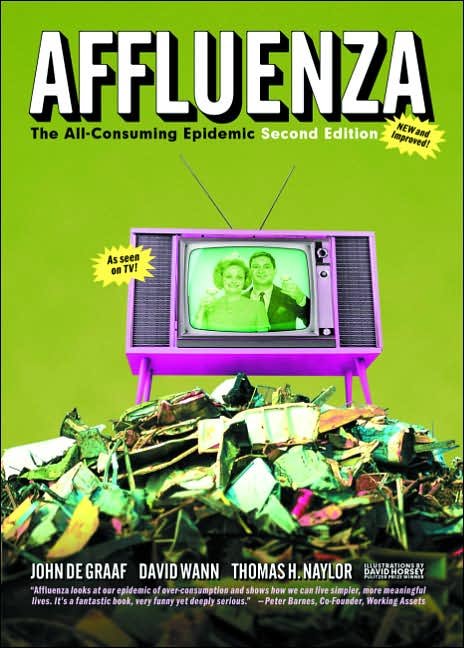
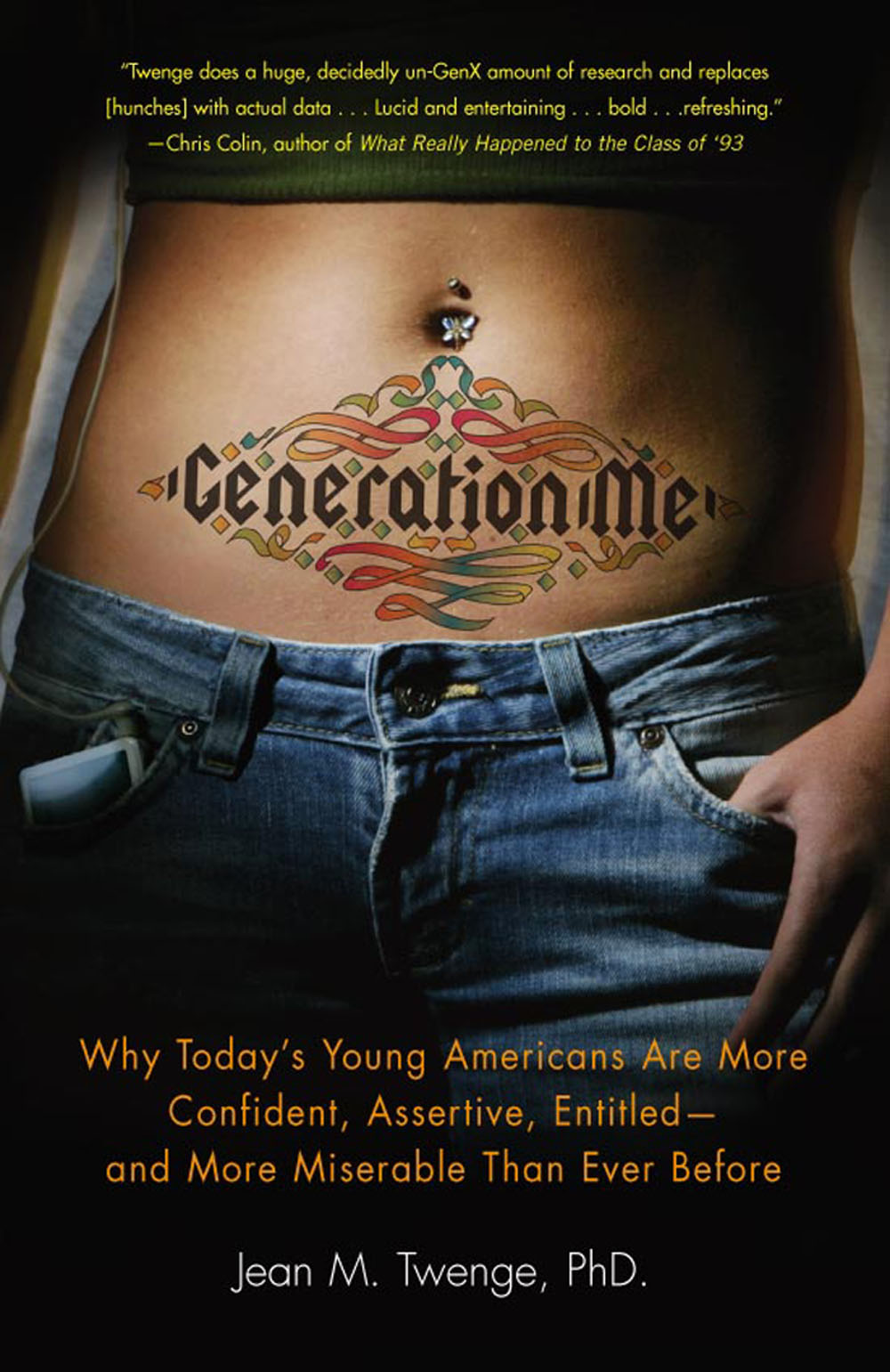
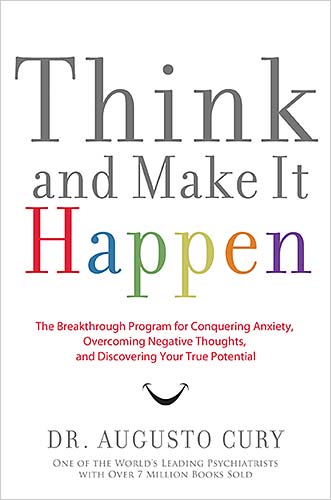
Being the weirdo that I am, I’m in a major dilemma today. I want to sit on the porch and read, but no matter which book I pick up, I’m pondering the others I didn’t choose in the back of my mind. I find myself unable to concentrate on any one of them, so decided to share them all with you!
Think and Make It Happe by Dr. Augusto Cury: This is my least favorite book at the moment. I’m reading it for the Thomas Nelson Bloggers book reviews. It’s a “change your thinking to change your life” kind of book that uses the mental stability of Jesus as its guide. It’s kind of interesting to look at scripture through that psychological profile, but it’s not speaking to me where I’m at! Nonetheless, I agreed to read it and review it, so on I go.
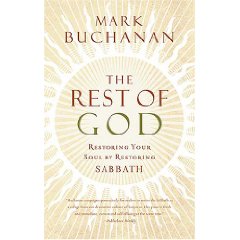
The Rest of God by March Buchanan: I’ve quoted from this before, and will again. I’m digesting it slowly. The books deals with restoring a Sabbath into our lives. Quote for the day from this book:
A Sabbath heart sanctifies time. This is not a ritual. It’s a perspective. And it’s not a shift in circumstances — you still have the same job tomorrow, the same problems with your aging parents or wayward children, the same battle looming in the church. But you make a deliberate choice to shift point of view, to come at your circumstances from a fresh angle and with greater depth of field. You choose to see your life otherwise, through a different lens, from a different standpoint, with a different mindset.
Generation Me by Jean M. Twenge: I haven’t begun this one yet, but it’s calling me with its funky cover. It deals with the peculiarities of this next generation, from a secular perspective. I thought that reading it i light of, say, Unchurched, would be interesting.
Peaks and Valleys by Spencer Johnson: This book is actually a line jumper. I bought it the other day and read it that night. Like his other books, this Spencer Johnson book is written like a parable. A young man is in the “valley” and wants to be on the mountaintop. By climbing a nearby peak, he meets a wise counselor who teaches him that the things you do while you are in the valley actually help you shorten your stay there and establish the good times on the peak that are to come. Great read. I’m still assimilating it and running it through the lens of scripture.
Affluenza by John DeGraff and others: I wrote about this last week. Finished it — substantially — yesterday. This is a convicting book, if a smidge liberal-minded for my taste. It has made me consider some of our lifestyle choices and best of all, offers a few simple changes to make life more enriching. That positive perspective — not a bashing for what you do now — is what drew me to this book.
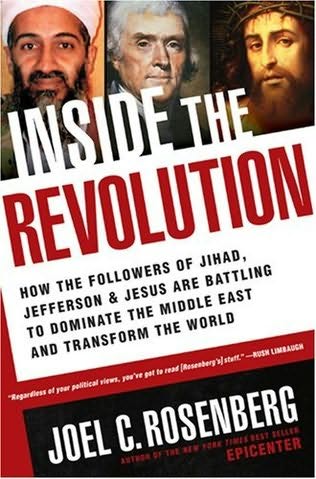
Inside the Revolution by Joel C. Rosenberg: I read everything by Rosenberg. I believe he is one of the smartest guys around. This book deals with “How the followers of Jihad, Jefferson & Jesus are battling to dominate the middle east and transform the world.” Heavy stuff, and actually a heavy (physically!) book as well.
When Dr. Laura makes sense!

This has been another intense ministry season for me, which partially explains the gaps in posting these days! I love writing. I love reading. Sometimes I love them more than, well, the people in my life. Lately, God has not been letting me get away with that attitude, and I’ve been fighting him. He wins.
So while I was fussing in my mind today over the back-to-back-to-back-to gym-to ministry events today (yeah, I complain over the gym, too), I happened to hear Dr. Laura on the radio. I didn’t even hear the whole caller, but the message came over loud and clear.
“As you go through new seasons in your life you need to find new ways to stretch yourself. Some women stretch themselves with physical challenges like kayaking. You have chosen to stretch yourself by helping others. Which do you think is more important?”
Not a direct quote — I was driving, not taking notes — but that was the gist of the message Dr. Laura was giving to a woman who felt guilty for all the time she was spending in her community. I believe she was also heading overseas for a short-term missions trip, leaving her adult children to fend for themselves. I don’t know all the circumstances in this woman’s life, but its application to my life jumped out at me. This is a season where God is stretching me out of my comfort zone. I’ve got to stop fighting and start stretching.
But I’d really like an afternoon on the porch with a cup of coffee and a good book.
Starbucks Infusions: stop, exhale, infuse

Have you tried the new tea infusions at Starbucks? I am not a tea drinker, and haven’t had the inclination yet to try them, but today the Berry Chai Tea Infusion over ice really struck me as something I need to try on a hot afternoon. Then I read the quote below from the Starbucks press room:
“It’s essential to take a pause and allow yourself to feel calm and at peace. In fact, taking a break can clear your mind and enable you to be more productive during a busy day,” says Lisa Drayer, registered dietitian and wellness expert. “A tea break is a quick and simple way to rejuvenate the mind, body and soul in the New Year. And since they provide a boost of anti-aging antioxidants, a tea beverage from Starbucks offers a healthful respite in today’s stressful environment.”
Yes…I need that. I need a pause to feel calm, and at peace. I need detoxing, anti-aging. I need that infused tea!
Just now I was reading from Ron Martoia’s Transformational Architecture about how God “infuses” his spirit into us.
It is God’s breath/wind/spirit that is hovering over the face of the deep, and it is the breath of God breathed into Adam that imparts to him and imprints in him the image of God. The obvious and fair conclusion is that everyone on the planet has this original infusion connecting them to God. Every person has the breath/spirit of God in them. When we come to the New Testament, we recognize that the Spirit of God, still viewed as wind/breath/spirit, bows into and around all human beings and has a personal relationship with those who desire it. The Spirit infusing the first creation in Adam is the same Spirit infusing the second, or new, creation.
can we see this as a fresh infusion to what already exists in every person? Is it possible to see this fresh infusion of Spirit as what reflavors the lives of those who follow Christ?
A friend of mine is busily writing the materia for a retreat she is going to lead around the theme of “Exhale!” and this concept of infusion seems to be related to me. We all need those moments to stop, breathe deeply, exhale, and breathe in. It’s a God-ordained rhythm in every area of our lives. When we exercise and use our bodies, we do this naturally. We breathe out and gulp in fresh air eagerly, as if our lives depended on it. At times when I’m on the treadmill, I’m quite certain my life does depend on it! That process of exhaling and infusing new life to our lungs accomplishes so much. We exhale all the toxins, stress, used up energy. We infuse our bodies with the new life, new nutrients, new energy.
Spiritually, this is what God’s Spirit does for us as well. As we expend our energy (and oh! how many ways we can use our energy for him!) God infuses back into us all we need for the next day, the next minute, the next moment of our lives. All that is required of us in this automatic process is to stop and exhale, then breathe deep. We breathe in and he infuses rest for our souls, life to our bodies, clarity, calm. It’s the best deal for our health and our souls that we can imagine. Stop, exhale, breathe.
I’m headed now to the gym to do some physical exhaling, and I’m spending some time right now to do a bit of spiritual exhaling as well. And this week? This week I plan to try a few new infusions, Starbucks and otherwise.
What would you do with 10,000 hours?


Groundhog Day, starring Bill Murray, is one of my favorite movies, even if it is a little repetitious! For years, friends of mine would come over every Groundhog Day for a meal and a little time reliving Murray’s frustration at having to live the same day over and over and over. There is a segment of time during the movie when Murray stops fighting against his fate and starts using the time available to him differently. He begins to read French poetry in the coffee shop. He takes piano lessons. He learns how to sculpt ice. That part of the movie has always fascinated me. What would I choose to learn if — like Murray’s character — I had all the time in the world available to me?
Recently Mark Batterson blogged about a book he is reading, Outliers by Malcolm Gladwell. Here is a part of what he wrote.
I’m currently reading Malcolm Gladwell’s new book, Outliers. Wanted to share a finding I’ve heard before. Basically, it takes 10,000 hours to become an expert at anything! It doesn’t matter whether it’s athletics or academics. According to Gladwell, there are no “naturals.” You have to put in the time. Generally speaking, the only difference between an elite person in any field and everybody else is usually a few thousand hours of practice time.
I find this study so empowering. Anybody can become an expert in just about anything. Obviously, you need a baseline of talent if you’re talking about music or sports. But you can accumulate knowledge and become an expert.
Wow. Did you catch that? It’s basically my Groundhog Day come to life. With 10,000 hours of practice at nearly anything, you can become an expert. So what are we waiting for? What is it that we want to become an expert in? Batterson went on to say that in becoming a great writer, you must put in the hours to becomea great reader. He estimates he’s ready 2,500 books since high school, adding up to over 10,000 hours. I thought about that, knowing that I’ve got him beat on the number of books. Yet, am I an exert? Not really.
One of Batterson’s readers, Jason Condon, responded in the comment section with his analysis of the book and another recommendation. Condon read “Talent is Overrated” by Geoff Colvin. In this book, the principle of 10,000 hours holds true, but Colvin takes it a step further. For you to develop that expertise, the hours of practice need to be intentional and directed. In other words, no one becomes an expert by accident! Jason Condon provided a link to his extensive notes of the second book, Talent is Overrated. After reading his summary I am excited to go out and get the book for myself, though I feel as if I’ve digested the important parts of the message. They are some of the best notes on a book I’ve run across. Click here to go check out Jason’s notes, and thank you, Jason, if by some chance you read this.
So we are back to our original question. It’s the start of a new year. What do you want to learn this year? Do you want to become an expert in a field? Or just learn a new skill? This year has over 8,000 hours in it. Those hours are going to slip by or they are going to be used intentionally. Unlike Bill Murray, we have a choice.
Here are a links to other blogs reviewing Talent is Overrated. I’m sure I’ll be reviewing it myself in the near future!
