Catalyst 08: Tim Sanders
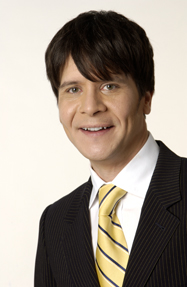
Tim Sanders started day two of Catalyst off with a great session focusing on scarcity versus abundance. Scarcity, he says, is all in your mind. You see, by yourself you may have nothing. But together – everyone adding their little together – we have more than enough. “You create abundance…by giving.”
This giving attitude extends to business. In this day and age, we want to do businesses with businesses that do good.
“Good is the new great.”
Law of Interdependence: we live in an interdependent world. Tim gave some great examples of companies that put “good” ahead of even the bottom line. He discussed UPS, which sponsored a school to work program ensuring that Louisville students had access to education and a guaranteed job.
Law of observed reciprocity: contagious compassion. People who see acts of compassion are more likely to engage in acts of compassion themselves. People are changed by seeing compassion in action. Tim told the story of the shoe company, Timberland, on a post-Katrina corporate trip to New Orleans. Upon talking with a volunteer in the ninth ward, one of the employees discovered that the volunteers had few shoes to wear in the debris-laden streets. Deciding that action begins with one person, the employee took off his own boots and gave them to the grateful volunteer. When the other employees – including the man’s boss – observed the action, they too donated their shoes. When the Timberland employees returned to their hotel, they discovered the staff lined up to thank them for their actions. A cell phone picture had told the story of their contagious compassion.
Give away your boots. Create a ripple effect: a single act of compassion that creates a chain reaction of contagious compassion.
“Good is the new great.”
Catalyst ’08: Craig Groeschel

Craig Groeschel was the last session of the day: hard to finish with energy after a day as full as this! But Craig Groeschel is the pastor of Lifechurch, which spearheaded the One Prayer event this summer. Craig spoke on the IT factor. IT is the special touch of God. It is how you know you get it, get the spiritual life in the kingdom. As Craig pointed out, you know when you have IT, and you know when you lose IT. Here are a few more thoughts about IT:
- God makes IT happen.
- We cannot create IT.
- IT is not a system.
- Lives are changed forever by IT: that is the upside of IT.
- IT attracts critics: this is the downside of IT.
- The most important thing in transmitting IT to your organization is to make sure you have IT.
The last part of Craig’s session was spent examining our lives, asking God to help us return to IT. Craig ended with these prayers:
“Stretch Me”
“Heal Me”
“Ruin Me”
Wow…and so ends day one. I’ve already been filled and flattened, encouraged and exhorted. Catalyst has been everything I’ve expected and nothing I expected. I can hardly wait for tomorrow!
Catalyst ’08: Seth Godin

What an unbelievable privilege to sit under the teaching of Seth Godin! He has nine bestsellers and the most read business blog on the net. His talk was full of novel thoughs, amazing illustrations and useful points to ponder!
The big idea: in this post-advertising age, person-to-person communication is the way churches, companies and products are marketed. He calls this concept Tribes, which is the title of his new book. A tribe is a self-selected group of people bound by a common idea or goal. There are insiders and outsiders. Some tribes are difficult to get into, others as easy as watching a television show.
So the question facing all of us trying to lead is this: where’s your tribe? Godin’s session reminded us that — once more — it’s all about the people.
Catalyst ’08: Steven Furtick

This was the session that lured me to Catalyst this year, and I was not disappointed. Unfortunately, there’s almost no way to convey the energy and personality of Steven Furtick in words. He is the pastor of Elevation Church in Charlotte, North Carolina. Elevation has 5,000 members after only two years. They baptized 1,000 people this year, and their 28 year old pastor (yes, 28) has a distinct call of God on his life.
Steven’s topic was I Kings 18, where Elijah has “heard the sound of abundant rain” even during a drought. He knows that God is going to provide the rain. This passage teaches us how to keep our vision in sight even when there’s no answer to see. The balance of the message was classic Steven Furtick: part old-time preacher, part prophet, part encourager and — once in awhile — the humble 28 year old man that he is. Steven’s demeanor is unique among the presenters today. Go to his website (you can find his link on my blogroll) and watch one of his sermons. It’s the only way to get a glimpse of this man working in the kingdom.
My favorite quote: “God’s preparing you for what he’s preparing for you.”
Catalyst ’08: William Paul Young

William Paul Young is the author of the book The Shack, which I think that nearly everyone has read! For this shorter session, he was interviewed about his experiences in writing the book, which was primarily written for his six children. After putting it online, it went viral over the internet. They spent something along the lines of $300 to market it. Amazing.
A couple of points stood out to me. First, his demeanor was humble and grateful to be where he was. Before The Shack he was working as a janitor and two other jobs. He also cleared up the first question that is always asked about The Shack: it is a parable. The Shack is a metaphor for the spiritual darkness we all find ourselves in. It is autobiographical in that the spiritual progression is William Paul Young’s spiritual progression, but it is not intended as a true story. Sorry…no Shack-hunting tourist trips! He concluded the interview by recounting some of the stories of people who were touched by their reading of the story, and discussing some of the reactions of Christians around the world to the story. Not all of these reactions have been positive, but he kept a good attitude towards them while reminding us that we are all brothers and sisters in Christ.
Catalyst ’08: Jim Collins

Jim Collins is one of our favorite business authors. His book Good to Great has literally redefined how business is done. Jim began his session by reminding the Catalyst audience, primarily a young audience, that not all times in your lives are equal. Some matter more than others, and this one matters a lot. It is time to be great. The overall message Jim Collins gave was that good is the enemy of great, and greatness is a function of discipline and choices.
Discipline of the flywheel
Most great overnight successes don’t come overnight. They are the result of one more “turn of the flywheel,” one more try. And then success breaks through seemingly overnight. In a twist of his usual concepts, Jim went on to examine how those who used to be great, became less great. How did they fall? It is not generally through complacency, or laziness, but from overreaching. We fall because of the undisciplined pursuit of more.
The number one sign that you have overreached your greatness: you grow beyond your ability to have the right people in the right spots on the bus. First find your people, then grow. this is called the Who Principle.
Jim discussed the turbulent times we find ourselves in, and reminded us that no one can predict the future. If you can’t predict it, you can’t really plan for it. Therefore, you need to focus instead on finding people who have the ability to adapt and change to an unstable environment. People first, then grow.
Next the session turned to a look at leadership types, specifically what Jim calls Level 5 leaders, those who lead the very best companies. The level 5 leaders all possess one distinguishing characteristic: they are humble. They have a burning passion for their company, their mission, but it is not about them. If it is about you, you will not build something great. Churches in particular often become dependent on a charismatic, powerful leader, but the distinguishing characteristic of a great church is that the work will go on without the personality.
The final concept Jim taught is the one that leapt off the notebook page to me: create a Stop Doing List. It’s like a To Do list, ony quite obviously different. What do we need to stop doing?
The big idea: Core values must never change. But don’t confuse values with practices. “Every generation needs to create its own practices to passionately exemplify eternal values.” Values remain, practices change.
Assignment list from Jim Collins:
- Go to jimcollins.com and use the diagnostic tool there: everything on the site is free!
- Answer these questions: How many key seats are there in your organization? How many are filled with the right people? What are your plans to get that number to 100%?
- Get young people in your face: this keeps your practices up-to-date.
- Who will you allow to be your mentors? Do you have any unintended or undesirable mentors?
- Build a council.
- Don’t try to be interesting, be interested.
- Take time to think — turn off electronics. Give yourself “white space” days. Work is infinite and will always fill up time. Time is finite. Use it wisely to think.
- How do I commit myself to something for which I have so much passion that i am willing to endure the pain of achieving it?
There followed a question and answer time with Andy Stanley, during which Jim elaborated on several key points. One of them that stuck out to me was this: you don’t have a job or a title, you have a responsibility. How you accomplish your responsibilities is up to you.
Catalyst ’08: Andy Stanley

Believe it or not, this was the first time I’ve ever heard Andy Stanley speak! After the amazing worship, we were ready to hear a message and boy did we get one. Andy spoke on Nehemiah, and the project of rebuilding the wall of Jerusalem. Here are some key points that struck home to me:
- Once you become an adult, rarely do the people who actually influence us have any real authority over us. They influence us because of their moral authority, instead. This is — for better or worse — also true of our own influence. In reality, we can’t MAKE anyone do anything. That is why your own moral authority is so crucial.
- You achieve moral authority when people perceive that there is an alignment between the creed and the deed. In other words, you walk the talk. Without this alignment you would have a credibility gap.
- Nehemiah had moral authority because for 12 years he chose not to take his “fair share” of the food and land. He chose to forgo power (land) in order to build his authority.
- All we really have is influence — everyone is a volunteer! Build your authenticity.
- These are the areas in which we need moral authority:
- Forgiveness: We have been forgiven, therefore we should forgive. If you are bitter, you lose your moral authority.
- Family: Prioritize your family. “Don’t exchange a role no one else can play (parent to your children) for a role anyone else can play (pastor etc.).”
- Finances: Your finances must be in order if you are working in a ministry where people give money. You need moral authority. If you want to lead generous people, be generous. “Give, Save, live on the rest.”
Catalyst 08 session two
Catalyst rolls on faster than I can process it! After our first break we heard Mark Batterson talk about Convoy of Hope. Then we heard the author of The Shack. Now Jim Collins (Good to Great) is speaking about discipline.
I can’t wait to share the principles and links to more information for you all!
Catalyst ’08: Just ten hours away

I can't wait for the worship tomorrow!
Well, we’re in Atlanta prepped and ready to go to Catalyst bright and early in the morning! David and I drove over to the Gwinnett Arena tonight to check out the action. In the lobby people were scurrying around setting up ministry booths and (thank you, Jesus!) table after table of books and other goodies. We ran into our friends Ryan and Sarah Grace Wall and remembered why we like to come to things like Catalyst: it’s all about the people! Another good friend of mine, David Imber, is running the production and lights tomorrow. I haven’t seen him in years, and can’t wait to reconnect. I wonder if there will be any other surprise friends waiting for me tomorrow?
Catalyst ’08
I’m getting excited about going to Catalyst ‘o8 this year! The speaker line-up is incredible. I don’t want to miss the opportunity to hear Billy Graham speak! Yes – Billy Graham. The speakers really are too numerous, and too amazing, to list. But I am excited about Stephen Furtick being there. He is one of the best new preachers I have come across in many years. God’s hand and anointing are on him. I love to get to Atlanta any chance I can get…so many of my very best friends live there. And Atlanta food…oh yeah.
Anyone else out there headed to Catalyst with me? The early registration deadline is today, June 26. They put this Geico add spoof out to encourage us to register. Very funny. And yes…those are their real voices!
Catalyst / Geico Spoof from Catalyst on Vimeo.
