Social Media: stepping in and out of the stream

Stepping out of the stream. That’s what’s on my mind today.
At this moment I’m hanging out in a quiet corner of the house catching up on all things social media: FaceBook, Twitter, email. I’m a little tired this morning, and realized a few minutes ago that I’m just staring at TweetDeck watching the Twitter stream flow by. Sometimes I’m interested in the tweets (I really DO want to know what’s on the new iPhone!). Sometimes I’m not. It seems important to get an overview of everyone’s day on FB, and add my own plans. This is life in the 21st century, and I adore it.
But sometimes that constant stream of flowing information changes the wiring in my brain. I forget to step out of the stream once in awhile to nurture the things that nurture me: quiet, reading, short naps, even checking items off my to-do-list. Today I’m feelnig the need to step out of the stream and regroup. I want to spend some time thinking about the people I love, the books I’m reading. I think I even want to get some real world errands accomplished, all by myself while I allow my brain to flow in its own stream for a change.
I love our interconnected world, with its multiple streams of community flowing in and out of our phones and computers. I’m just going to make sure I don’t get swept away by it today.
The Tangible Kingdom Primer: book review

Recently I received a copy of The Tangible Kingdom Primer to review here on Coffee Shop Journal. Usually reviewing a book is a straightforward thing: you read it, you decide if you like it or not, and you write about it. The moment the Primer arrived in the mail, however, I knew I was in trouble. This is not the kind of book you can read and forget. It’s a commitment.
The Tangible Kingdom Primer is designed as a small group, communal activity. It’s a wire-bound workbook, divided into seven days of experiences each week. But it is also more than that. “The Tangible Kingdom Primer is about learning how to live in the Kingdom and how to create pathways for others to experience it along with you.” This is one of those books that you have to live out and live in for awhile. Frankly, it scares me. I can’t wait to dig in.
The Primer is designed for an incarnational community, or in simple terms, a group of people who are committed to their spiritual growth together. Really together. Radically together. This is a handbook for how to form that community, and — the missing link in so many small groups — how to bring action and change to that group. There’s solid information here, but there is also motivation and meditation. Days are devoted to concepts, meditation, action, change, community and even rest. It’s kind of like — wait for it — life in the Kingdom.
So in keeping with the foundational concept that life in the kingdom is a journey, this review is going to be a journey, too. I’m going to work through this primer and share what I learn here on the blog. I’m hoping, though I don’ t know if this will work, to have companions on this trip. I’d like to find a small group of people willing to take this trip with us. In any case, I’m ready to go. So go find a copy of The Tangible Kingdom Primer and jump in the journey with me. I leave you with one more quote from the prologue, which is where I find myself literally and metaphorically.
“Everyone is talking about community Everyone seems to want it, most complain if they don’t find it, but it’s harder to pull off than you’d think. People complain of time constraints, busyness, fear, and often have memories of community gone bad. We’ve got children to deal with. Some people struggle to relate well socially. We’re often 30 minutes drive or more away from people we like to hang out with. We’re stressed about money. We overwork, and when we do get some free time, we have a hard time sharing that time with others. Sure, we all know we need this thing called “community” and we even have some inklings that tell us that our friends need it too. Yet, a Grand Canyon-sized gap exists between our hopes and our realities.”
What do you think, you all? Who’s in with me?
To purchase the Tangible Kingdom Primer, go to this link. I was unable to find it on Amazon, so I couldn’t give you all a link straight through. But it’s available on the Tangible Kingdom site.
Related links from Coffee Shop Journal on The Tangible Kingdom:
The Tangible Kingdom Without Words
Patriot’s Day, bowling alleys and some sweet chocolate cream puffs

Home. Place. Community. Connections.
Driving from the airport, my mind travels a path nearly as well-worn as the Revolutionary Road we are following in the car. Pop out of the airport tunnel and Yes! There is Paul Revere’s neighborhood, a place we have walked so many summers in a row that we feel we owe old Paul some rent. I think about the friends we have walked with: some starting lives in a new part of the country, some watching their mother slowly die, some celebrating milestones in their children’s lives. I pray for them while letting my eyes roam over Boston’s skyline.
Oh! Just passed the U-Haul dealership where David and I rented that first little trailer to bring all my earthly posessions to Florida, days after our honeymoon. I remember watching him hitch the trailer to my car, unsure if this man I’d married even knew how to do such a thing, but counseled in wisdom enough to keep my mouth shut.
Other landmarks of my life begin sliding by: the gas station where we stopped for gas after a close friend’s wedding, the apartment where the old lady my parents befriended used to live in with her cats. She made amazing chocolate cream puffs for us each Christmas, thankful to have a kind of family to celebrate with. Those cream puffs were the flavor of my childhood. I saw them as a treasure — and they were — but not for the childish reasons I imagined.
We enter and exit the death-defying rotary that must have given my parents nightmares when I was learning to drive (why did they never mention how hard it was to see your baby girl behind the wheel?). I pass The Bowling Alley. It is the same — exactly — as my youth group nights. Fleetingly my mind wanders over the friends of my youth, my first crushes (yes Mark, it was you) and my first agonies. I wonder if the memories of my life are as cracked and faded as that old bowling alley that surely should have been renovated by now. Do we automatically do extreme makeovers on our memories? I think we must, because these memories are shiny, loved, lived in. But there’s no time to dwell there, because now we are passing the used-t0-be-disco-that-used-to-be-a-Chinese-restaurant. Aunt Shirley’s car was stolen there, full of birthday presents for my grandparents.
The exit for my childhood home rushes past, but before I can ponder it I am caught by the sight of the Mormon temple. It is new and alien in the familiar landscape of my youth, and so the only memory connected with it is that Mitt Romney lives very near by. But now we are passing the back roads we used to take to drive to my daddy’s favorite coffee shop, and the flood of those memories is so strong that Mitt Romney fades away in a wistful puff of smoke. Now it is all Daddy using up my brain. He’s everywhere in these streets, he and my brothers. It has been seventeen and fifteen years since my two brothers died, and four and a half since Daddy died. It is a long time to have to use the same, never growing store of memories. I greet them like the old friends they are.
Finally we are close to the place we call home up here in Lexington, Now we are walking the sacred ground of early history, tracing the footsteps of John Hancock, Paul Revere and all those countless lobsterbacks. I’ve celebrated early many April mornings as New Englanders re-enact it all every Patriot’s Day. These are the paths I run or walk slowly with the dog and my iPod. They are the community that put its earliest memories into my life, near the church where I learned, baptized, married, and buried.
This is what it feels to belong to a place. It is to me like walking with ghosts. There are voices everywhere, and I recognize them as part of me. I smile, and wonder what voices my daughters will hear when they travel the south Florida lanes of their youth.
But for now it is enough to be welcomed home.
Community: who needs you to speak for them?
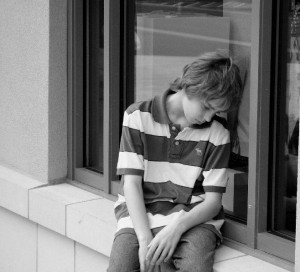
A picture is worth a thousand words? Perhaps. But lately I’m thinking the thousand words might be quite valuable, too.
I’ve been processing the experience I had at the Journey of Generosity workshop this past weekend. As is sometimes the case, the lesson God had for me became crystal clear in the first hour of our 24 hour retreat. Bob Coy, Pastor at Calvary Chapel in Fort Lauderdale, spoke via a videotaped presentation. He began to tell the story of 100 people. You’ve probably heard it before. It begins “If these 100 people in the room today represented the world as a whole, 70 of them would speak Spanish.” Bob continued on making percentages real by applying them to the 100 people in the room, and it ends with the reminder that 6 people in the room would control 50% of the world’s wealth. And we are all one of the 6. But there is 1… a little boy … who is dying. Because he is hungry. And the 1 little boy’s daddy looks to the 6 to ask them, please, for food.
I’m sure you’ve been in one of those discussions before. I had. And along with a healthy dose of guilt for being in the 6, there is usually a strong desire to help the 1. Followed by frustration. Because in the end, it’s still percentages. And not only, in real numbers, is the need so overwhelming, but I am so small!
And yet…
Should that 1 little boy walk into our home, and should we hear his true story and see the tears on his daddy’s face, in that crystal clear moment, not one of us would refuse to help him. We would give anything to feed — such a simple act — this little one.
We only pass by because we haven’t really heard the voice call.
Now we’re back to the thousand words. In the community of our church, our neighborhood, our country and our world, there are stories waiting to be told. Small needs that can be met; large needs that can be met by all of us together. They need words to describe the needs. That’s where God spoke to me.
Apparently there’s 1 little boy in the corner of the world waiting for me to write his story and give him a voice.
I have no clue what this means, but I’m being gut-level honest and telling you what I learned at the Generous Giving conference. I thought I’d be writing a check (and I will be, I’m sure). Writing checks doesn’t take 1000 words, and it’s a lot easier. Instead I have some voices to find.
Walkable neighborhood: surprise!
Last night we arrived home from Orlando too late to go to the gym, but feeling weighed down and guilty from the weekend! To salve our consciences, David and I decided to take a rare walk around the neighborhood. We did three miles and gained more than we lost!
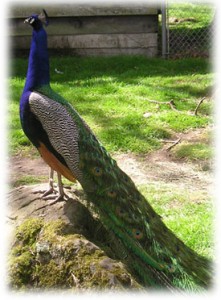
There is something about being outdoors that immediately calms you, reminds you that your life is small compared to God’s incomparable bigness. It makes me feel comforted. One of the things that attracted me to this neighborhood in the first place is that we have a group of peacocks who live here! There is a lake in the middle of our neighborhood, which is called Square Lake. Around the lake live dozens of peacocks. If you ever wanted a reminder of God’s creativity and royalty, peacocks will do it.
We also encountered a new neighbor who was riding something called a trike. It looked like a stand up scooter with two platforms. The motion needed is something like skiing. When David and I commented on the cool factor of the trike, Kevin (our new acquaintance) hopped off and let David try it. Two minutes, a pause in a walk. Community.
There were other neighbors along the way, including a woman with rotating dogs every mile. We saw three in the course of the walk. There was the mysterious tree fire (yes, tree) in the backyard of a neighbor we don’t know. A tree flaming like a torch. And there was the policeman who lives on the corner, home for a moment to run his dog around the yard. We ended by looking at a few of the horses who still live in the neighborhood, and mentally planning who we’d like to move into the foreclosed fixer-upper. Not sure if that last would be a blessing or a curse, but it sped us along our way talking about it.
A simple walk last night reconnected me to a community that I take for granted in my car-based lifestyle. And while I’m headed back to the gym today (it wasn’t a very intense workout!), I’m glad it was closed last night.
Happy Memorial Day.
Could you live here?

One last post from the Village (the retirement village for Mom!).
On the way into the Village Mom was getting nervous and fidgety in the back seat. “I know everyone wants me to do this. I know Jesus wants me to do this. But I’m not ready yet.” My heart sank when I heard her: we already have a contract on a house! And yet I recognized her words for what they were…fear of the unknown. The world is growing incomprehensible to Mom as the Alzheimer’s keeps marching along. How frightening to start over again.
But once more, this older generation knows how to foster community. My aunt anticipated my mother’s reaction, and planned ahead. She gathered friends and family who knew mom. She cooked an amazing meal and set a perfect table, the kind of table you see in magazines or your memory, but we don’t produce much anymore. We went to see the house to set Mom’s decorator’s mind to work, then we returned to my aunt’s house for an evening filled with the oldest of friends. They laughed, they told stories. One couple knew my dad from childhood, and had new stories to contribute to his already large repetoire of folk lore. My mom laughed and told long stories that these people seemed to understand in spite of her garbled delivery. When she finished her story we all looked at each other with a gleam of triumph in our eyes. She was happy, and so we were too.
David and I hovered in the background and watched the amazing evening unfold. I ran dishes back and forth (all their feet hurt, or their backs). I refilled water glasses. I provided the audience for stories that began with “Marla, did you ever know that…”
Most of all, I sat at the feet of masters in community building. In just this way, these five people began to weave a community around my mom. They accepted her limitations — every one of them had a limitation of some sort or another — and they steadfastly spun a picture of a future for her that could also include her past. For an Alzheimer’s patient, the past is the only future they can have. My aunt and my other family and friends taught me a lot about the intentional nature of community. Spontaneous gatherings are wonderful — and I excel in those. But this was the time and the place for being intentional in meeting a need, a need that my Mom didn’t even realize she had.
I expect to learn a lot from these folks in the days to come.
Social networking, connections, and life in the coffee shop
We snuck away this morning at the crack of 10:30 to steal some time in the local Starbucks here in Snellville, Georgia. I have to admit, it’s one of my favorite Sbux anywhere: good furniture, good placement, VERY friendly people. It was worth the effort to get there for breakfast while we waited for the ex-freshman to get ready for her drive south today.
When I first sat down I opened my Twitter account and caught up with friends I’ve never met in person. Then a few family members who surprise me by actually following my online world. Two friends were texting some pretty major prayer requests, which David and I agonized over from a distance. I love the fact that sitting in my coffee shop in Georgia, I’m still in touch with the heart of my community and my life. I’ve read debates over the validity of social networking in Christian circles. This stuns me. Are you kidding? Faith is nothing without the relationships that make up the body.
And nothing has connected the body like social networking.
So many implications.
Community: Laugh with those who laugh…

Living in community has its downsides. Often we idealize what it is like to live in radical openness with each other, total commitment. We — appropriately — dream about having people who love you and will stand with you in your time of need. We imagine dinners, coffee, a little more coffee, and maybe one more shot. How lovely to have those we love near us to share our lives.
But there’s also the other side: you take on each other’s sorrows. When your neighbor hurts, you feel the pain in your gut. When your community is stretched thin, you stretch a little bit more. When crisis pops up its head — and it always will — it no longer matters if it is your crisis or not.
I was touched by community this week.
While preparing to celebrate the wedding of two dear friends in the student ministries department at our home with a rousing party, David and I learned that our neighbor’s son was having some health issues that required his parent’s lives to halt while they deal with the crisis. In a matter of minutes after hearing of the issues facing this sweet boy the student ministries department decided to focus on praying for him, putting off our celebration because our friends are hurting. I was impressed with their empathy, their love.
Ecclesiastes says it best: there is a time for everything, dancing, but also weeping. Tonight is the time for praying over our friend. Our dancing will come later. We started out celebrating one kind of love tonight. We ended up celebrating another kind of love altogether.
Do the Possible: City Place Christ Fellowship

Relationships follow several predictable rules, one of which is that to be friends, you need to be there. You’ve got to put the time in to form the base of the friendship. A relationship is made up of all the days and nights of walking through experiences together: laughter, life change, job losses, baby births, deaths in the family, crazy visits from oddball family members. Relationships grow in the middle of life. So to do life together, you’ve got to be there.
The same holds true for churches. If you want to impact your community, you’ve got to be there.
That’s why I love our City Place campus of Christ Fellowship. It’s there. Right there in the middle of the crazy hustle and bustle of life. City Place itself is an outdoor destination mall reclaimed out of downtown West Palm Beach. It is a jewel of shops, restaurants, movie theaters, living spaces. It is also right in the middle of downtown West Palm, which means it can sometimes boast a rowdy crowd. There are partiers; there are homeless; there are upscale Palm Beachers; there are students living in the small apartments and wreaking havoc with peace and quiet. And at the center of all this coming and going sits a grand old lady, the Harriet Himmel Theater. The “Harriet” as she is referred to, began her life as a downtown church. When the area deteriorated, so did she. Eventually the building was bought and turned into a cultural venue in the center of City Place. Proms, bar mitzvah’s, wine tastings: these are the events that get the Harriet dolled up.
And now, church.
Christ Fellowship rents the Harriet for the City Place campus all day every Sunday. It is stunning. There, where life happens, is our church. They have dealt with all the problems that come with such a location. Since the theater is centrally located and our doors are (naturally) open, visitors come and go at will. During one of our first services a witch — yes that kind — stood in our balcony mumbling over our service. We’ve had a congregation that mixes up class lines and age lines, though it skews younger than our other campuses. With no permanent offices, the City Place church and staff are commited nevertheless to living out an incarnational representation of Christ in the city. The result is a congregation that is comfortable hitting the streets of their community. They throw park parties wth food for the neighborhood, they pray over City Place itself, they feed the homeless. In fact, they have too many volunteers for their Monday night homeless ministry.
In other words, the City Place campus has learned how to be a friend. They have learned how to be there.
This week John Poitevent, the campus pastor, launched the City Place version of our churchwide series, iSearch. He spoke about money in the midst of financial crisis. Afterward he led a man to the Lord, helping him take his first steps into the Kingdom. “I was talking about money today,” said John. “That was unexpected.” Unexpected maybe, but a faith that applies to the places you live is practical. Learning the right response to money gives a framework for this man to strengthen his life. It is real, and reflects Jesus’ heart.
After church, David and I sat on a City Place bench waiting for our girls to join us for lunch. We watched the people come and go. Upstairs, the waiters from Taverna Opa formed a Greek dance line and danced through the outdoor balcony of the restaurant. A party. A line from John’s sermon kept echoing through our heads. “God’s math is this: you do what’s possible, and then God will do the impossible.” Although John was referring to finances, it applies everywhere in life including the incarnational living out of the gospel in the middle of West Palm Beach. Do what’s possible. God will do the impossible. We focus all too easily on the second part, the impossible part, the overwhelming situation or the sinking ship. We sometimes forget the first part. Do what IS possible.
I think that’s how I see City Place Christ Fellowship these days: as a friend who is there, who encourages us to get up out of the church and just do something. Do what is possible. After that, it’s all up to God.
Am I responsible for Starbucks?

Well, yes. I single-handedly pay for Howard Schultz’s salary each year, but that’s not what I’m referring to.
My quest for the perfect coffee shop environment is rooted in my desire for that mythical “great good third place.” It is the place on which Coffee Shop Journal is based: the place where community and coffee and culture meet, grow and develop. Now I’ve toured pretty much all of the coffee-based shops around here, and I can tell you that my third place does not exist. Not yet. Place 1 might have the comfy chairs and physical environment I’m looking for, but its management team is not people oriented, and so the store has no sense of community. Place 2 has community, but its physical environment is not conducive to “living and breathing” in the store. Each stop on my tour is missing one or another crucial ingredient. When I visit other cities I find places like Blue Joe’s Coffee in Oregon (which has since closed) or Stumptown Coffee, also in Oregon. These stores have potential for my third place!
But here it is time to press on and make do. Starbucks it is. Pick a store. And if you’ve read this blog for any amount of time, you know I have my favorite spots to perch around town.
Yet in all my ramblings about third places, it never occurred to me that I have a responsibility in developing a third place until I read “Affluenza” by John de Graaf. Discussing our over-focus on work as the goal of our days, he quotes Benjamin Barber in “A Place for Us.”
He urges us to rise up from our couches and collectively reenergize the third place, between big government and big business, where ‘citizens breathe freely and behave democratically without regarding themselves as passive complainers, graspinng consumers, or isolated victims. This third place, treasured throughout American history, is where civic life thrives. Barn raisings and Habitat for Humanity raisings; church philanthropic projects; holiday festivals and block parties; demonstrations and protests; volunteer activities like PTA and Red Cross; neighborhood watches, community grdens, and lively discussion groups — all these activities remind us that we belong to an extended family that needs and values our participation.
Later he asks the question, “How might malls be designed to mak space for neighborhood health clinics, speaker’s corners, child care centers and public art galleries?”
This view is a more active citizen-led third place, a commitment of MY time and energy. Epiphany: you get out of life what you put into it. If I want a third place, I need to do my part. I am responsible for my Starbucks. It’s time to give back, not just order my cup and walk away. To quote Howard Behar, one of Starbucks’ former guiding executives, “It’s not about the coffee.”
